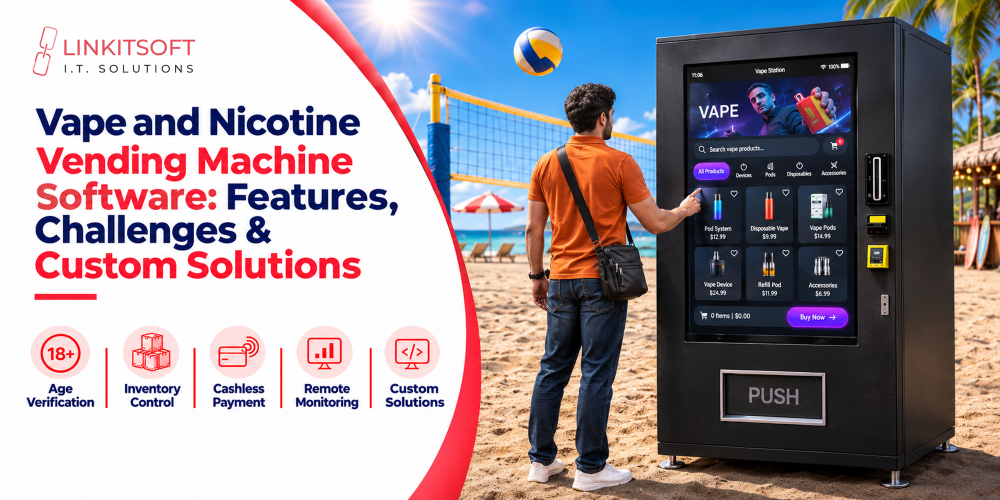
Vape and nicotine vending machine software helps operators monitor machines, manage inventory, track transactions, and detect technical issues remotely.
Without reliable software, businesses risk downtime, stockouts, payment failures, and delayed maintenance. Custom software can address these challenges through advanced monitoring and hardware integrations.
In this guide, we’ll explore key features, common challenges, compliance requirements, and custom software solutions to help you make the right choice.
What Is Vape and Nicotine Vending Machine Software?
Vape and nicotine vending machine software helps operators manage, monitor, and control vending machines through connected applications and dashboards.
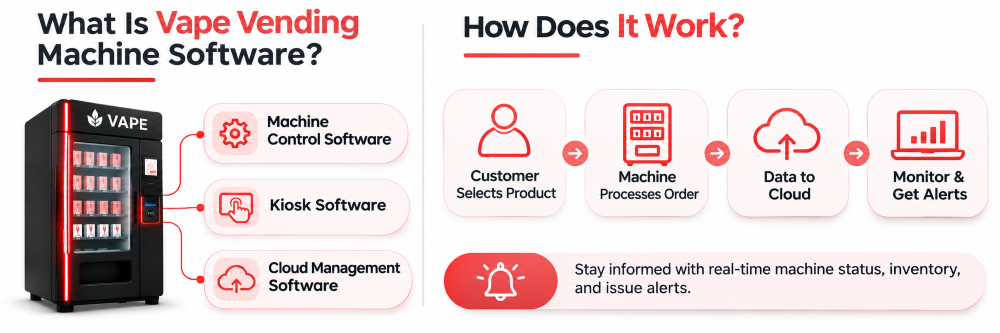
It typically includes three main components:
- Machine Control Software: Manages hardware communication, product selection, and dispensing operations.
- Kiosk Software: Provides a customer-facing interface for product selection, payments, and supported age-verification workflows.
- Cloud Management Software: Enables remote monitoring of machine status, inventory, transactions, and technical issues.
Together, these components help operators streamline vending operations and manage multiple machines more efficiently.
How Does Vape Vending Machine Software Work?
A customer interacts with the machine through its interface. The local application coordinates with the controller and other approved integrations. Machine events and transaction information can then be transmitted to a management platform.
When supported by the hardware and network, the system can notify operators about connectivity problems, low inventory, or dispensing failures.
What Can Standard Vending Software Already Do?
Standard vending software typically offers inventory tracking, remote monitoring, transaction reports, and basic controls. These features may be sufficient for smaller operations, depending on business needs and machine compatibility.
What Challenges Do Vape Vending Machine Operators Face?
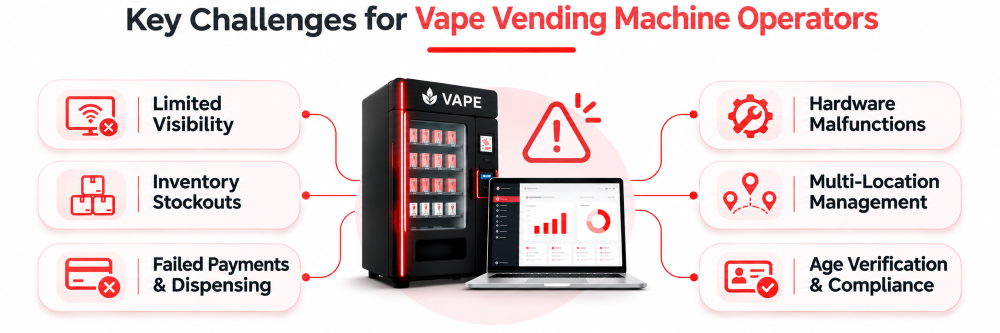
Managing vape vending machines involves challenges such as connectivity issues, inventory shortages, payment failures, and regulatory compliance. These problems become harder to manage across multiple locations.
Limited Visibility Into Remote Machines
Without remote monitoring, operators may not know when a machine goes offline. Vending software helps track connectivity, monitor machine status, and send alerts when issues occur.
Manual Inventory Tracking and Unexpected Stockouts
Manual inventory checks are time-consuming and can lead to stockouts. Inventory management software tracks product levels, records dispensing activity, and provides restocking alerts.
Failed Payments and Unsuccessful Dispensing
Payments may succeed even when products fail to dispense. Reliable software tracks payment and dispensing statuses separately, helping operators identify failed transactions and investigate issues.
Hardware Malfunctions and Delayed Maintenance
Motor faults, sensor failures, and connectivity problems can disrupt operations. Remote monitoring software can detect supported machine errors, record fault logs, and notify operators.
Managing Different Machines Across Locations
Managing multiple machines with separate dashboards makes reporting difficult. A centralized management system can bring compatible machines together for easier monitoring and reporting.
Age Verification, Licensing, and Compliance Challenges
Vape vending operators must follow applicable age restrictions, licensing rules, and product regulations. Software can support age-verification workflows and compliance records but cannot replace legal requirements.
What Features Should Vape Vending Machine Management Software Include?
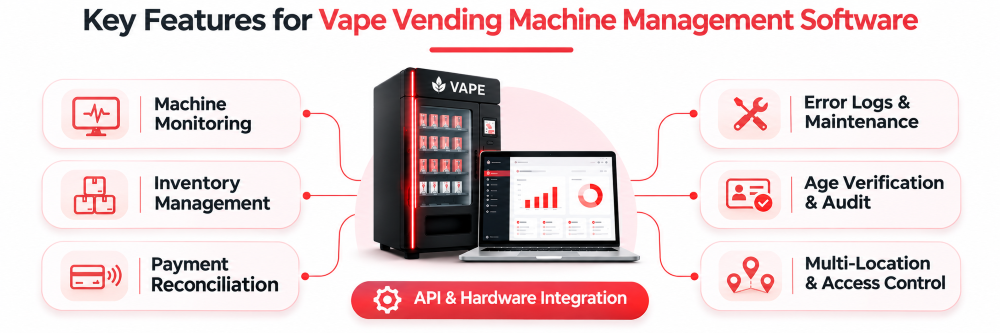
Effective vape vending machine software should support remote monitoring, inventory management, secure transactions, and regulatory requirements. Here are seven essential features:
1. Real-Time Machine Monitoring
A centralized dashboard tracks machine connectivity, status, and activity. Automated alerts notify operators about offline machines, enabling faster troubleshooting and reducing manual checks.
2. Inventory and Restocking Management
Inventory software tracks product quantities, dispensing activity, and stock levels. Low-stock alerts help operators plan restocking and prevent unexpected shortages.
3. Payment and Transaction Reconciliation
Transaction reporting tracks successful, declined, and incomplete payments. It can also connect payment records with dispensing results to help identify and resolve failed orders.
4. Device Error Logs and Maintenance Alerts
Diagnostic logs record machine faults, error codes, and connectivity issues. Automated alerts help operators identify technical problems and schedule maintenance before further disruptions.
5. Age Verification Integrations and Audit Records
Software can integrate with supported age-verification services, block transactions after failed checks, and maintain relevant audit records while protecting sensitive customer information.
6. Multi-Location Dashboards and Administrator Permissions
A centralized dashboard helps operators monitor compatible machines across locations. Role-based permissions control staff access and simplify reporting, troubleshooting, and daily operations.
7. API Integrations and Hardware Compatibility
Custom APIs and SDK integrations connect supported vending machines, payment providers, and management systems. Compatibility depends on available hardware documentation and manufacturer access.
How Can Software Support Age Verification and Regulatory Compliance?
Vape and nicotine vending machine operators must follow federal, state, and local regulations. Software can support age-verification workflows, transaction controls, and compliance recordkeeping, but it cannot replace legal requirements.
Understanding Federal Tobacco 21 Requirements
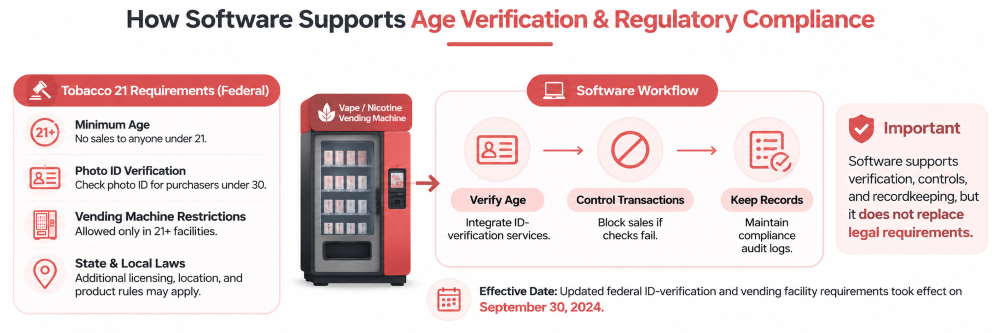
Under the FDA’s Tobacco 21 regulations, operators must follow these key federal requirements:
- Minimum Age: Selling tobacco products, including e-cigarettes, to anyone under 21 is prohibited.
- Photo ID Verification: Retailers must check photo identification for purchasers under 30.
- Vending Machine Restrictions: Tobacco vending machines are permitted only in facilities where individuals under 21 are neither present nor allowed to enter at any time.
- State and Local Laws: Additional licensing, location, and product restrictions may apply.
The updated federal ID-verification and vending facility requirements took effect on September 30, 2024.
How software helps: Compatible systems can integrate age-verification services, block transactions when required checks fail, and maintain relevant audit records. However, these features do not automatically make a vending operation legally compliant.
Integrating Age Verification Technology
Vape vending machine software can integrate with supported identity-verification services to help manage age-restricted transactions.
Key capabilities include:
- ID Verification: Process identity and age checks through supported providers.
- Transaction Controls: Block transactions when required verification fails.
- Audit Records: Maintain relevant verification outcomes for compliance reviews.
However, ID scanners cannot make prohibited vending locations legal. Operators must independently meet applicable facility requirements outlined in the FDA’s tobacco retail guidelines.
Managing State and Local Restrictions
Vape vending regulations vary by state and locality, making location-specific compliance checks essential.
Operators should review:
- Licensing Requirements: Required state and local permits.
- Location Restrictions: Rules governing where vending machines may operate.
- Product Regulations: Restrictions on permitted products and sales.
Software can support recordkeeping and location-specific controls, but operators must verify legal requirements before deployment.
Checking Product Authorization
Not every vape or nicotine product is legally authorized for sale in the United States.
The FDA’s Searchable Tobacco Products Database helps retailers identify products that may be legally marketed.
Vending management software can support product oversight through:
- SKU Management: Track products and catalog details.
- Product Restrictions: Disable products that fail required checks.
- Approval Records: Maintain internal product review histories.
However, software cannot independently determine whether a product is legally authorized.
Protecting Customer Information
Age-verification systems may process sensitive personal information, making data security an important software requirement.
Essential safeguards include:
- Data Minimization: Collect and retain only necessary information.
- Access Controls: Restrict sensitive data to authorized personnel.
- Secure Integrations: Protect information through appropriate encryption and security measures.
- Retention Policies: Define how long records are stored and when they are deleted.
The Federal Trade Commission’s data protection guidance provides practical recommendations for securing customer information.
Ultimately, compliance should be built into vending software workflows from the beginning, rather than added after deployment.
Standard vs. Custom Vape Vending Machine Software: Which Is Better?
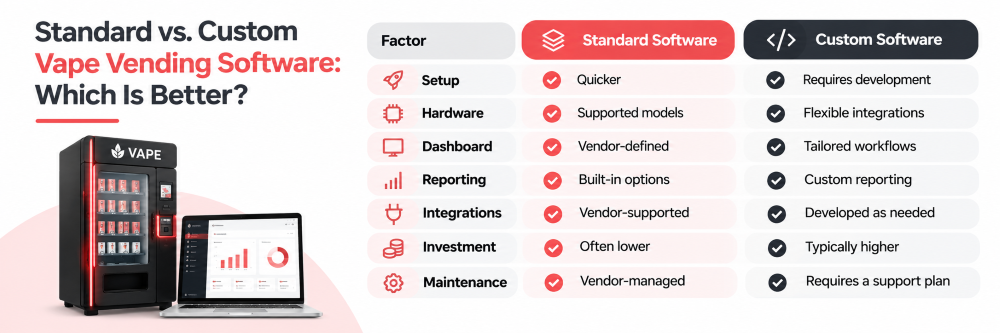
One of the most important decisions is whether to use the manufacturer’s existing platform, integrate additional tools, or develop a custom solution.
Standard vending software generally provides ready-made features for supported machines. Custom software is designed around specific technical or operational requirements.
When Is Standard Software Enough?
Standard software may be the better option when an operator uses compatible machines and already has reliable monitoring, inventory management, and transaction reporting.
It can reduce the need to build and maintain a separate platform.
When Does Custom Software Make Sense?
Custom development becomes relevant when the existing system cannot support required workflows or integrations.
For example, an operator may want to consolidate supported machines from different manufacturers, integrate an existing enterprise system, or develop a branded management application.
When Should You Invest in Custom Vape Vending Machine Software?
Custom vape vending machine software becomes valuable when existing systems cannot meet specific operational, technical, or business requirements. Here are six situations where custom development may be worth considering.
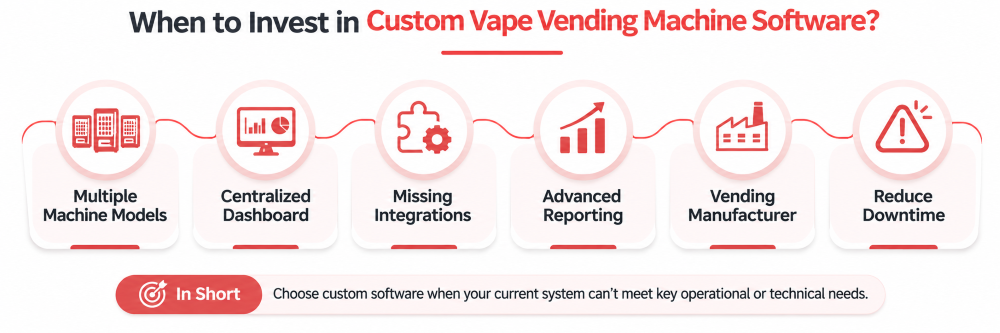
1. You Operate Multiple Vending Machine Models
Different vending machines may use separate controllers and management systems. Custom software can integrate compatible hardware into a centralized platform, simplifying monitoring and daily operations.
2. You Need a Centralized Management Dashboard
Managing machines across multiple locations can be challenging. A custom dashboard provides unified access to machine status, inventory, transactions, and operational alerts.
3. Your Existing Software Lacks Essential Integrations
Standard vending software may not support specific payment providers, APIs, or hardware protocols. Custom development enables tailored integrations where compatible interfaces are available.
4. You Require Advanced Reporting and Analytics
Basic reports may not provide sufficient operational insights. Custom software can offer detailed transaction histories, inventory reports, machine performance metrics, and location-based analytics.
5. You Manufacture or Supply Vending Machines
Manufacturers may need branded kiosk applications, customized device controls, or white-label management platforms. Custom development helps create software tailored to supported hardware and business requirements.
6. You Face Frequent Technical Issues and Downtime
Recurring connectivity failures, dispensing errors, and hardware faults can disrupt operations. Custom software can provide diagnostic logs, automated alerts, and remote troubleshooting capabilities for supported machines.
Before investing, evaluate whether upgrading your existing platform or integrating additional tools could meet your needs more cost-effectively.
How Is Custom Vape Vending Machine Software Developed?
Custom vending machine software development involves more than creating a dashboard. It requires understanding how the application communicates with physical hardware and external services.
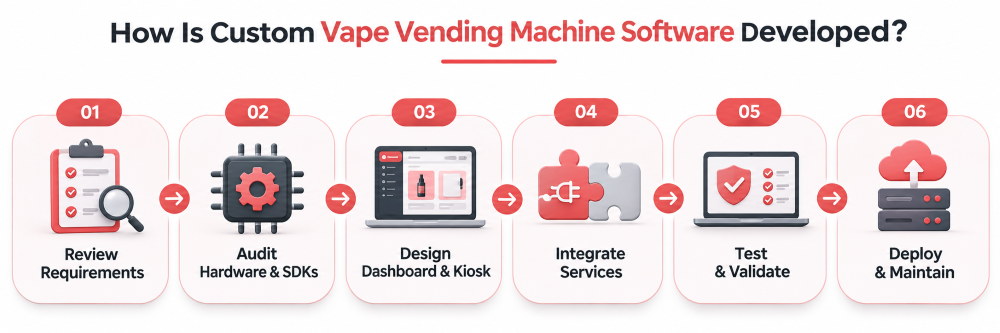
A structured development process typically includes the following steps.
Step 1: Review Business and Compliance Requirements
Identify machine types, required software features, user roles, operating locations, and applicable legal constraints.
This helps define what the system must accomplish and which requirements need further validation.
Step 2: Audit Hardware, Firmware, and SDKs
Review the machine controllers, supported communication protocols, manufacturer documentation, and available SDKs.
This stage helps determine whether the proposed features are technically possible.
Step 3: Design the Dashboard and Kiosk Workflows
Create interfaces for supported machine interactions, monitoring, inventory, administrator controls, and reporting.
The design should make important operational information easy to locate.
Step 4: Integrate Connected Services
Develop the required connections to telemetry services, supported payment providers, management systems, and appropriate verification services.
Each integration should include suitable error handling and access controls.
Step 5: Test Hardware, Transactions, and Security
Test normal operation alongside network interruptions, payment timeouts, controller errors, and dispensing failures.
Pay particular attention to situations where a transaction changes state without confirmation that the hardware completed the requested action.
Step 6: Deploy, Monitor, and Maintain
Once the system has been validated, establish deployment procedures, monitoring, incident response, and ongoing maintenance.
Software updates should be tested for compatibility with the supported machine models.
How Much Does Vape Vending Machine Software Development Cost?
The cost of custom vending machine software depends on the project scope and the complexity of the required integrations.
A basic management dashboard is different from a platform that must communicate with multiple machine controllers, coordinate payment states, manage administrator permissions, and process real-time device events.
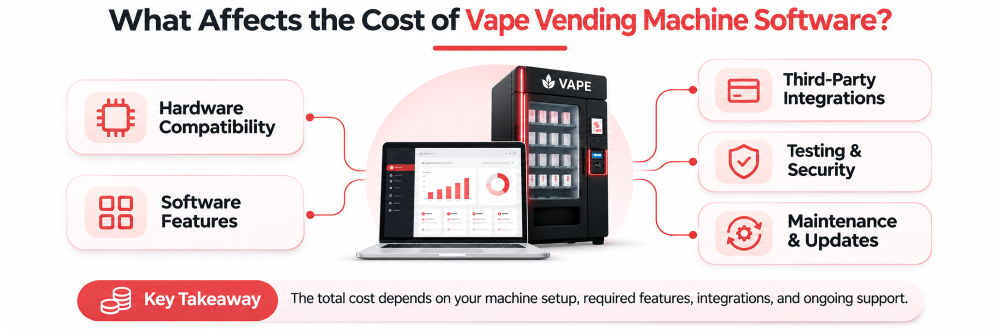
Several factors influence the development budget.
Hardware compatibility: Integrating documented APIs is generally less complex than working with limited or proprietary device interfaces.
Software features: Inventory management, reporting, fault alerts, and multi-location administration and development requirements.
Third-party services: Payment processors, identity-verification providers, and cloud infrastructure may introduce setup, usage, or ongoing service fees.
Testing and security: Physical hardware testing, transaction recovery, access control, and failure handling require dedicated engineering effort.
Maintenance: Hosting, monitoring, software updates, and compatibility support should be considered beyond initial development.
Updating an existing platform may also cost less than creating an entirely new system, depending on its architecture and condition.
For a useful estimate, operators should prepare their machine models, required features, expected integrations, and existing technical documentation.
A requirements-based assessment is more reliable than an unsupported universal price range.