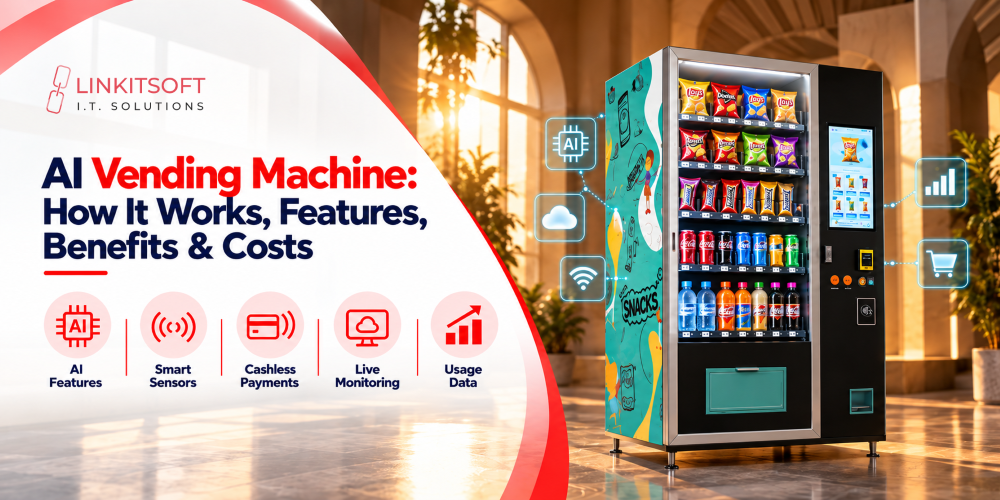
An AI vending machine uses artificial intelligence to recognize products, analyze sales, and manage inventory more efficiently. Unlike traditional machines, AI-powered vending machines can offer automated checkout, demand forecasting, and smarter operational decisions. These capabilities help businesses reduce manual work, improve stock management, and enhance customer convenience.
This guide explores how AI vending machines work, their key features, benefits, costs, and important factors to consider before investing.
What Is an AI Vending Machine?
An AI vending machine is an automated retail system that uses artificial intelligence, machine learning, and computer vision to recognize products, analyze sales, and improve operations.
Depending on the technology, AI-powered vending machines can use cameras, sensors, and intelligent software to automate checkout, forecast inventory needs, and monitor performance.
Unlike regular smart vending machines, they use AI to support intelligent decision-making.
How Do AI Vending Machines Work?
AI vending machines combine physical hardware, sensors, software, and data processing to automate different parts of the purchasing and management process.
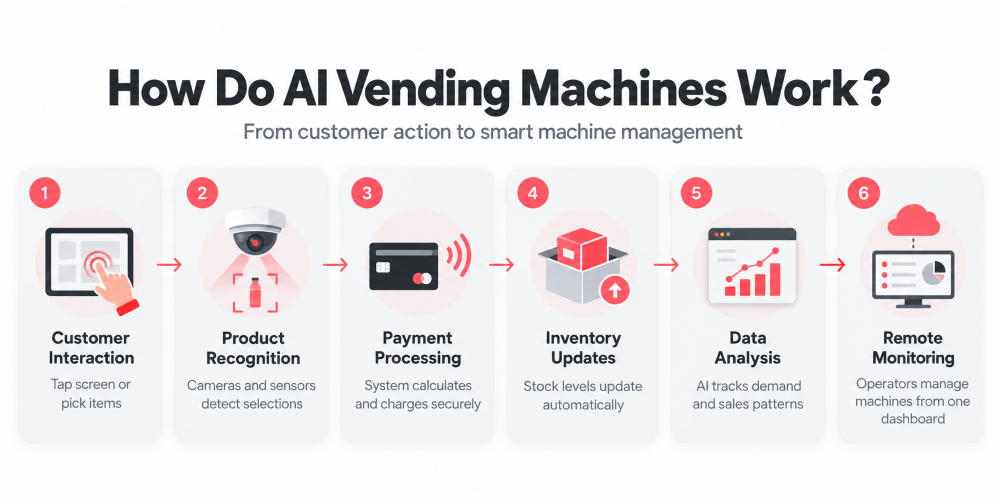
1. Customer Interaction
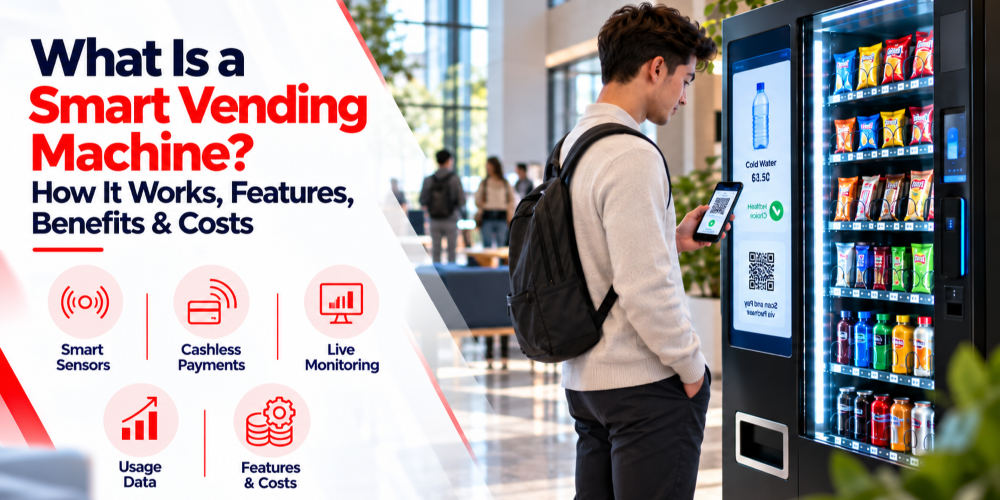
The customer begins by using a touchscreen, payment terminal, or smart cabinet. Depending on the machine, they select products through a digital interface or open the cabinet and pick up their chosen items.
2. Product Recognition
Cameras and computer vision models identify products selected by customers. Some machines also use weight sensors to detect items being removed or returned, helping the system accurately determine what the customer has chosen.
3. Payment Processing
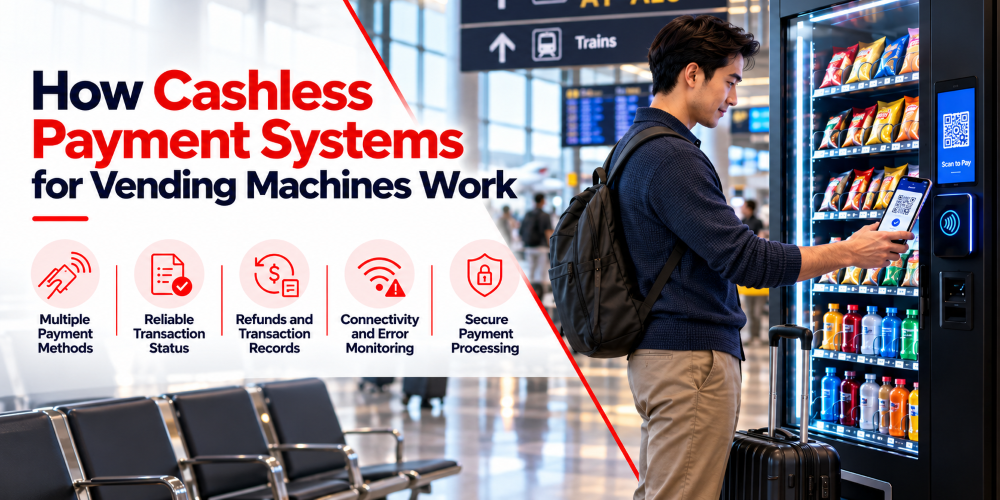
The machine sends purchase details to an integrated payment system. Customers can use supported cards or digital wallets, while grab-and-go systems automatically calculate the final amount from products detected during the shopping session.
4. Inventory Updates
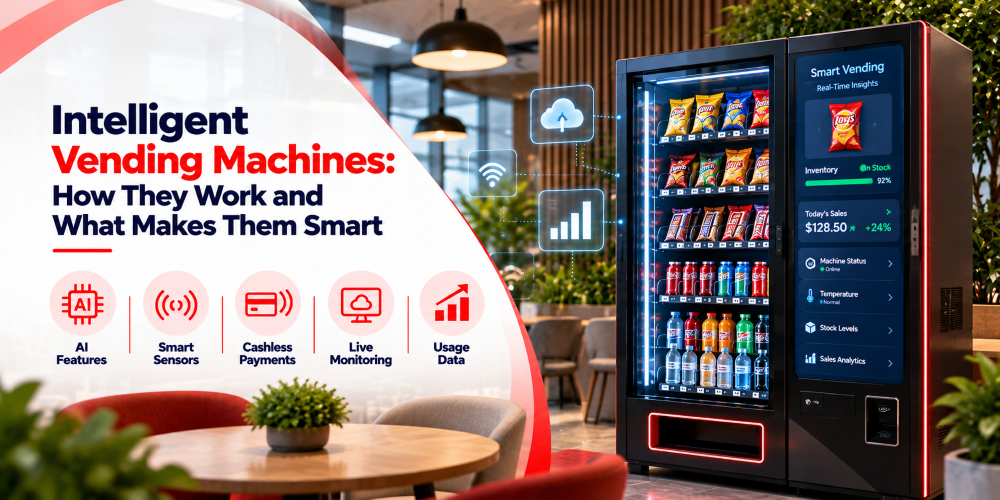
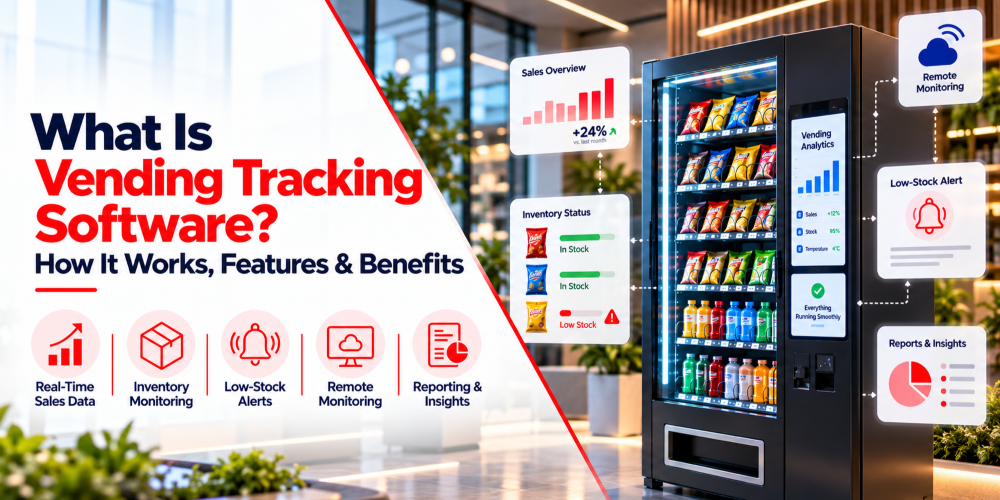
After a completed purchase, the system records the transaction and updates inventory levels. Connected vending software can synchronize this information with a central dashboard, helping operators track stock across different machines and locations.
5. Data Analysis
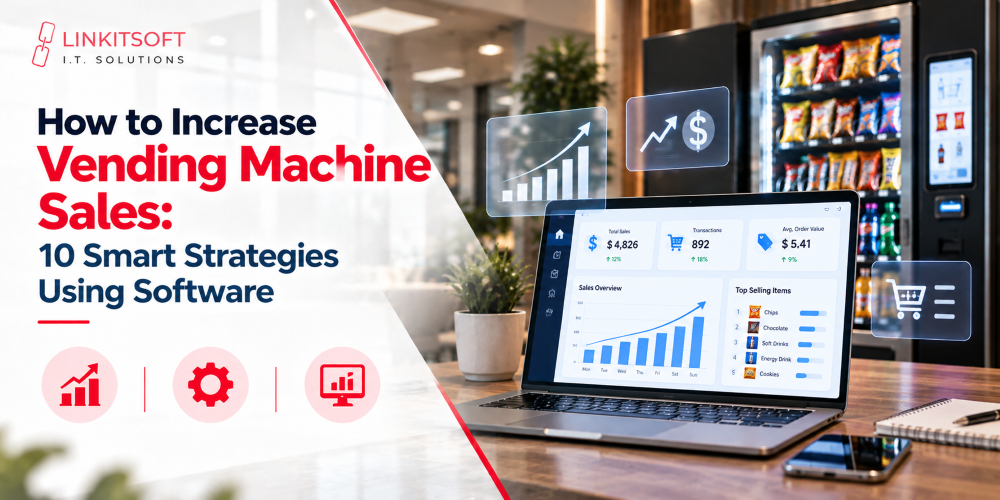
AI software reviews sales history, product demand, and machine activity to identify useful patterns. Operators can use these insights to forecast demand, adjust product selection, and make better decisions about future restocking schedules.
6. Remote Monitoring
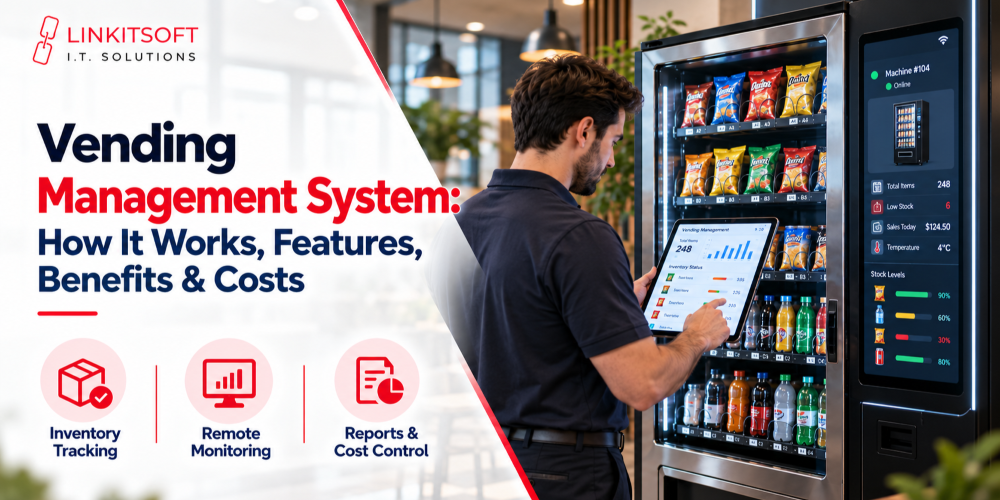
Cloud-connected management software lets operators check machine status, inventory, transactions, and alerts remotely. A centralized dashboard provides visibility across multiple locations, helping teams identify issues and coordinate daily vending operations even more efficiently.
AI Vending Machines vs. Traditional Vending Machines
Traditional vending machines focus primarily on dispensing products after receiving payment. AI vending machines add intelligent functions that can improve purchasing experiences or operational decisions.
| Feature | Traditional Vending Machines | AI Vending Machines |
| Product selection | Buttons or touchscreen | Touchscreen or AI-assisted grab-and-go |
| Product recognition | Usually not required | Computer vision in supported models |
| Inventory management | Manual or connected monitoring | May include AI demand forecasting |
| Checkout | Conventional payment and dispensing | Conventional or automated checkout |
| Sales reporting | Standard reports | May include predictive insights |
| Maintenance | Scheduled or reactive | May support predictive analysis |
| Machine management | Local or connected | Often integrated with centralized software |
It is important to distinguish AI functionality from standard smart vending features. Cashless payments, cloud connectivity, and remote monitoring can also be available in machines without artificial intelligence.
The main difference is whether AI is used for recognition, prediction, recommendations, or other intelligent functions.
Key Features of AI-Powered Vending Machines
The capabilities of AI vending machines depend on their hardware, software, and intended applications.

1. AI-Based Product Recognition
Computer vision technology allows compatible vending machines to identify products using camera images. This supports grab-and-go shopping, where customers select items directly without using a conventional product selection interface.
2. Intelligent Inventory Forecasting
AI analyzes historical sales to estimate future product demand. These forecasts help operators identify products requiring additional stock and make more informed inventory planning and replenishment decisions.
3. Real-Time Machine Monitoring
Connected systems allow operators to monitor machine status, inventory levels, and transaction activity remotely. Collected operational data can also support AI-based analysis and improve overall machine management.
4. Predictive Maintenance
Machine learning models analyze sensor readings and operational data to identify potential equipment problems. This helps operators plan maintenance earlier, minimize unexpected failures, and reduce unnecessary machine downtime.
5. Sales Analytics and Recommendations
AI-powered analytics identify purchasing trends and product demand patterns across locations. These insights help operators optimize product selection, improve inventory distribution, and make informed merchandising decisions.
6. Cashless Payment Integration
AI-enabled vending machines can integrate with compatible cashless payment systems, supporting credit cards, debit cards, and digital wallets. Available payment options depend on hardware compatibility and payment provider integrations.
7. Centralized Vending Management
A centralized platform allows operators to manage inventory, transactions, machine activity, and reporting from one dashboard. Businesses can use vending management software to streamline daily operations across multiple locations.
8. AI-Powered Anomaly Detection
AI models can analyze transactions and machine activity to identify unusual patterns or unexpected behavior. These insights help operators investigate operational issues, detect irregularities, and improve system reliability.
Benefits of AI Vending Machines for Businesses
AI-powered vending technology can provide operational advantages when implemented to address specific business requirements.
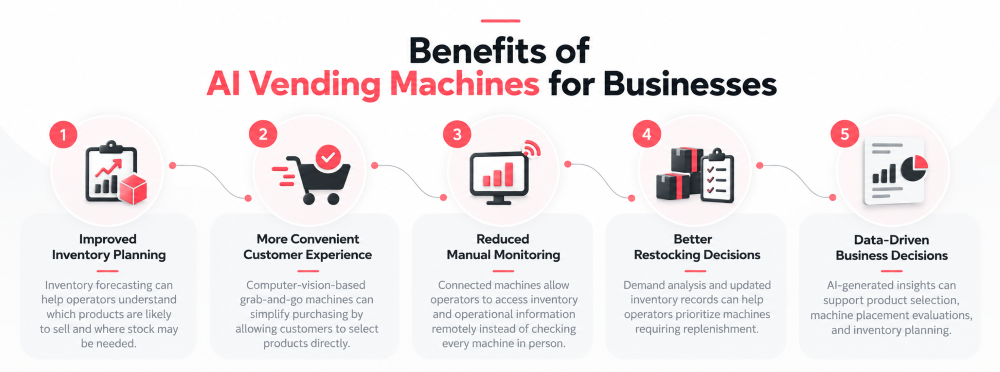
Improved Inventory Planning
Inventory forecasting can help operators understand which products are likely to sell and where stock may be needed.
This reduces reliance on assumptions when planning replenishment.
More Convenient Customer Experience
Computer-vision-based grab-and-go machines can simplify purchasing by allowing customers to select products directly.
This can make transactions more convenient in environments where quick access is important.
Reduced Manual Monitoring
Connected machines allow operators to access inventory and operational information remotely instead of checking every machine in person.
Better Restocking Decisions
Demand analysis and updated inventory records can help operators prioritize machines requiring replenishment.
This can make servicing more efficient when combined with appropriate route planning.
Data-Driven Business Decisions
AI-generated insights can support product selection, machine placement evaluations, and inventory planning.
The actual results depend on the quality of available data and how businesses use the recommendations.
Where Are AI Vending Machines Used?
AI vending machines can support automated retail in different commercial environments.
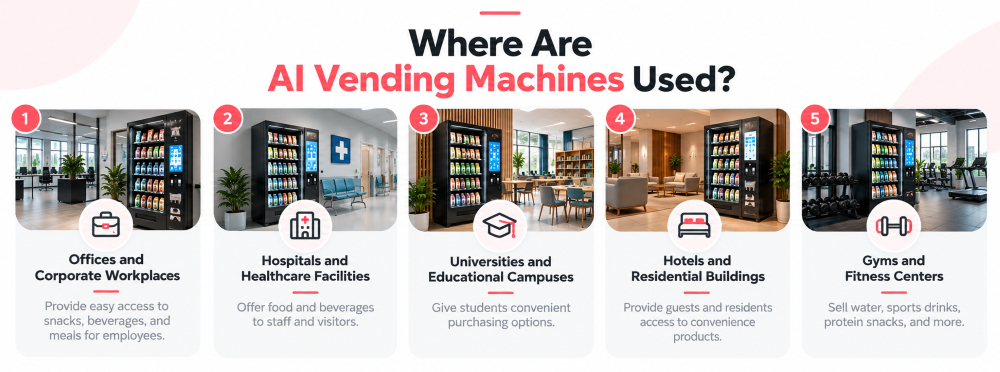
Offices and Corporate Workplaces
Offices can use AI-enabled smart coolers to provide convenient access to snacks, beverages, and packaged meals.
Hospitals and Healthcare Facilities
Healthcare facilities can use suitable automated retail machines to offer food and beverages to staff and visitors beyond regular cafeteria hours.
Universities and Educational Campuses
AI-powered vending systems can provide students with convenient purchasing options while helping operators analyze demand across campus locations.
Hotels and Residential Buildings
Smart vending machines can provide guests and residents with access to convenience products without requiring a staffed retail counter.
Gyms and Fitness Centers
Fitness centers can use AI-enabled machines to sell bottled water, sports drinks, protein snacks, and other suitable products.
What Are the Best AI Vending Machines?
The best AI vending machines depend on the products a business intends to sell, its budget, operational requirements, and available software capabilities.
Different vending models serve different purposes.
| Type | Suitable Applications | Main Consideration |
| Computer vision smart coolers | Beverages and packaged food | Product recognition accuracy |
| Hybrid camera and weight-sensing machines | Automated grab-and-go retail | Sensor performance |
| Conventional machines with AI analytics | Existing vending operations | Data and controller compatibility |
| Custom AI vending machines | Specialized automated retail | Hardware and software flexibility |
Businesses researching available options may encounter providers such as SandStar, HaHa Vending, Vendera, and Micromart.
Before selecting a machine, evaluate the following factors:
- Product compatibility: Can it accommodate the intended products?
- Recognition performance: Can it identify products accurately under normal operating conditions?
- Software integration: Can it connect with the required management tools and payment systems?
- Remote access: Does it provide visibility into machines across different locations?
- Scalability: Can it support additional machines as the business expands?
- Technical support: What maintenance, software updates, and support arrangements are available?
A solution should meet the business’s actual operating requirements rather than simply offering the largest number of AI features.
How Much Does an AI Vending Machine Cost?
The cost of an AI vending machine depends on hardware specifications, AI capabilities, machine capacity, and software requirements.
As a broad indication, publicly advertised US smart vending hardware prices in 2026 include entry-level AI smart coolers around $3,000, with more advanced or specialized machines exceeding $10,000.
These are indicative hardware prices rather than complete implementation costs.
Additional expenses may include:
- Software licensing or subscriptions
- Payment processing fees
- Internet connectivity and cloud services
- Installation and hardware configuration
- Maintenance and technical support
- Custom software development
- Inventory and replenishment
For a business developing its own AI-powered vending system, costs also depend on the complexity of computer vision, device integration, backend development, and management software.
The most useful approach is to compare total ownership costs against expected revenue, operating expenses, and operational improvements.
Challenges and Limitations of AI Vending Machines
Before investing, businesses should consider several technical and operational challenges.
Product Recognition Accuracy
Computer vision systems may encounter difficulties with similar packaging, obstructed camera views, or changing lighting conditions.
Recognition models require appropriate testing to ensure reliable performance.
Hardware Compatibility
Existing vending controllers and machine components may not support the required AI integrations.
Hardware capabilities must be evaluated before development or upgrades begin.
Connectivity Dependence
Some AI functions rely on cloud services and reliable internet connectivity.
The availability of offline functionality depends on how the system is designed.
Security and Data Privacy
Connected machines may process payment information, operational records, and camera data.
Appropriate security controls and relevant privacy requirements must be considered during implementation.
Can Existing Vending Machines Be Upgraded With AI?
Yes, existing vending machines can be upgraded with AI, depending on their hardware, connectivity, and software compatibility.
Potential upgrades include:
- Demand Forecasting: Predict future product demand.
- Sales Analytics: Analyze purchasing trends.
- Inventory Management: Improve stock tracking and replenishment.
- Predictive Maintenance: Identify potential equipment issues.
- Product Recognition: Detect products using cameras and sensors.
Advanced features may require additional hardware or software integration. Custom vending software development can help businesses evaluate compatibility and upgrade requirements.
How Linkitsoft Supports AI Vending Software Development
Building an AI vending system requires more than incorporating artificial intelligence into a machine.
The hardware, payment infrastructure, machine application, cloud backend, and vending management platform must work together.
Linkitsoft provides custom vending software development services for businesses building or modernizing automated retail systems.
Depending on project requirements, these services can include:
- Custom machine-side software development
- Vending machine hardware and controller integration
- Payment system integration
- Cloud-based vending management platforms
- Inventory tracking and reporting
- Remote machine monitoring
- AI and IoT integration planning
Linkitsoft’s experience also includes the Vendy case study, which demonstrates a contactless vending solution involving QR-based purchasing, digital payments, and inventory synchronization.
Businesses exploring AI-enabled vending can use this development experience to plan software architecture, evaluate hardware requirements, and identify suitable integration approaches.
Are AI Vending Machines Worth the Investment?
Yes, AI vending machines can be a worthwhile investment when they improve efficiency, reduce operational costs, and enhance customer convenience.
Key factors to consider include:
- Operational Efficiency: Reduce manual tasks and improve restocking.
- Customer Demand: Evaluate location traffic and purchasing behavior.
- Profitability: Compare expected revenue with operating costs.
- Maintenance Costs: Consider software, hardware, and support expenses.
- Scalability: Test performance before expanding to multiple locations.
Businesses should evaluate their goals, costs, and expected returns to determine whether AI vending technology is the right investment.