
A vending machine business can generate consistent sales without needing staff on site all day. That’s the appeal. But sales figures alone don’t tell you whether the business is actually profitable. Equipment costs, product prices, location fees, repairs, and restocking all affect what you keep at the end of the month.
Here’s an honest look at the costs, revenue, and margins involved.
How Does a Vending Machine Business Make Money?
The model is straightforward. You buy products from suppliers, set retail prices, and earn the difference between what you sell and what it costs to run the operation.
The challenge is that machines don’t all perform equally. A drinks machine in a busy workplace might see purchases throughout the day. One in a quiet corridor might barely cover its costs. Even two machines in the same building can produce different results depending on placement, products, and hours.
The goal isn’t just to sell more. It’s to choose locations and products that generate enough sales to cover expenses and leave a worthwhile return.
How Much Does It Cost to Start a Vending Machine Business?
To begin with, the expected costs can be between $3,500 and $5,000 for a single machine or $5,000 to $15,000+ when launching with two to three machines.
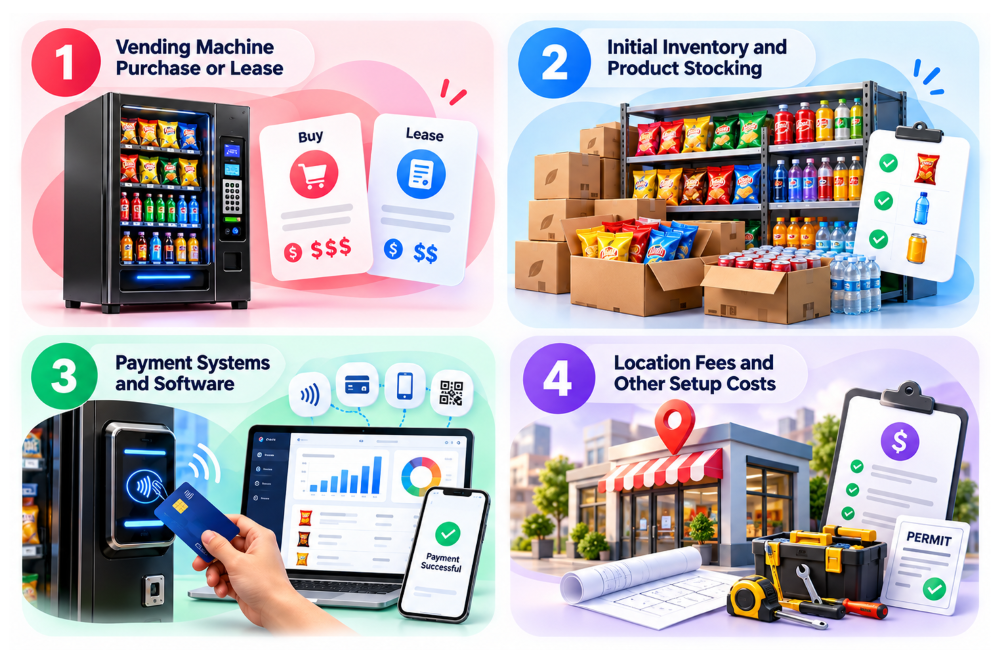
Vending Machine Purchase or Lease
Buying a machine is usually the biggest upfront expense. New machines cost more but typically come with warranties and modern payment options. Used machines cost less but need careful checking for condition and cashless payment compatibility.
The machine type matters too. A basic snack machine, a refrigerated drinks machine, and a connected smart vending unit all sit at different price points.
Leasing reduces upfront cost but adds a recurring payment that reduces monthly profit. Over the full agreement, leasing can cost more than buying outright. The right choice depends on available capital and how quickly the machine is expected to cover its costs.
Initial Inventory and Product Stocking
A machine needs stock before it can make its first sale. The initial order should reflect the location’s likely demand rather than just filling every slot. A workplace might need drinks and quick snacks. A gym does better with water and protein products.
Money spent on inventory is tied up until products sell. Starting with a focused range and adjusting based on actual sales avoids unnecessary inventory costs early on.
Payment Systems and Software
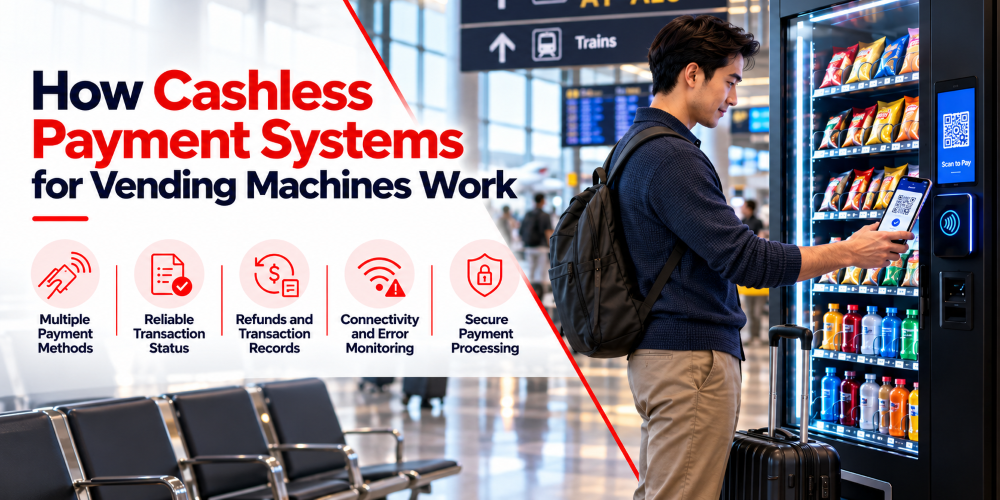
Adding card or contactless payment capability to older machines requires additional hardware and can involve transaction fees or recurring service charges. These fees look small individually but add up across many purchases.
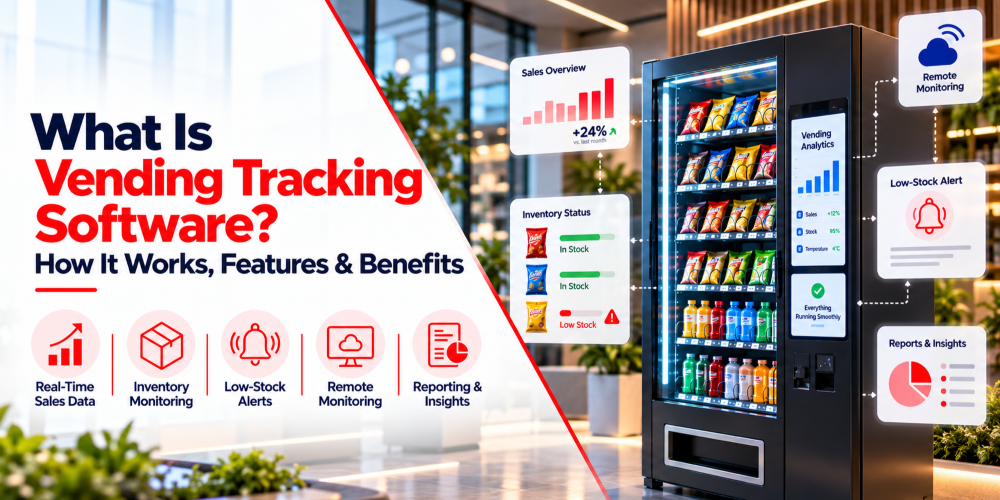
Vending software adds another cost consideration. Depending on the platform, operators pay for sales reporting, inventory tracking, remote monitoring, or device management. A single machine might need only basic reporting. A growing fleet benefits more from centralised management. Connectivity costs like mobile data plans should be factored in too.
Location Fees and Other Setup Costs
Property owners might charge fixed rent, take a percentage of sales, or set other conditions. Transport and installation add to the budget too. Vending machines are heavy and moving them properly often requires specialist equipment. Electrical work, network setup, and permits may apply depending on the location.
A sensible starting budget covers the machine, initial inventory, payment equipment, installation, location costs, and a reserve for early repairs. Running out of cash before the machine generates consistent income is one of the most common early mistakes.
How Much Revenue Can a Vending Machine Generate?
There’s no reliable universal figure because location, products, and traffic vary so much. A machine in a busy hospital or office building can generate consistent daily sales. One in a low-traffic area might make only a handful of sales per day.
A simple example to illustrate the range: a machine making 15 sales per day at an average of $2.50 generates around $1,125 in monthly gross sales. One making 30 sales per day at the same average reaches $2,250.
These are illustrative figures, not typical earnings or any kind of guarantee.
Neither number tells you actual profit. Product costs, location commissions, payment fees, transport, maintenance, and other expenses all come out before you see what’s left.
What Are the Main Operating Costs When Running a Vending Business?
Once a machine is installed, the business still has regular expenses. Some increase as sales grow, while others continue even during a slow month. Tracking both helps operators understand whether a machine is earning enough to justify the time and money spent on it.
Product Restocking
Products are usually the largest ongoing expense. Buying in bulk can lower the cost per unit but only makes sense when products sell quickly. Overstocking slow-moving items wastes cash and risks expiry. Reviewing actual sales before each order helps operators stock what customers are buying rather than what they assume they will.
Location Commissions and Payment Processing Fees
Location commissions vary from a fixed fee to a percentage of sales. Payment processing fees reduce the amount retained from card and mobile transactions. A small fee per purchase can become significant at high transaction volumes. Both need to be factored in when assessing whether a location is actually worth keeping.
Maintenance, Repairs, and Transportation
Machines need regular cleaning, inspection, and occasional repairs. Coin mechanisms jam, card readers drop connections, and dispensing mechanisms fail. Refrigerated machines need cooling equipment maintained. Transport costs accumulate too, especially when machines are spread across different areas.
Planning visits around actual stock levels and machine condition reduces unnecessary travel. Delaying important repairs to save a trip can cost more in lost sales than the trip itself.
Software, Connectivity, and Other Recurring Expenses
Monthly fees for management software, mobile data, payment services, and remote monitoring add up. Insurance, storage, and administrative costs may also apply. Tracking these by machine makes it easier to spot equipment or locations where ongoing costs outweigh the revenue being generated.
What Is the Typical Profit Margin for a Vending Machine Business?
Margins vary widely depending on product category, pricing, location fees, and how efficiently the operation runs. It helps to understand the difference between a few key terms.
Product markup is the difference between what you pay and what you charge. A snack bought for $0.80 and sold for $1.50 has a $0.70 markup.
Gross profit is sales revenue minus product costs. In that example, gross profit is $0.70 or about 46.7% of the $1.50 selling price, before any other expenses.
Net profit is what remains after all operating expenses. Here’s a simplified monthly example:
| Item | Amount |
| Gross sales | $2,000 |
| Cost of products sold | $900 |
| Gross profit | $1,100 |
| Location commission | $200 |
| Payment fees | $60 |
| Transportation and maintenance | $140 |
| Software and connectivity | $50 |
| Net operating profit | $650 |
That’s a 32.5% net operating margin in this example, before taxes, financing costs, or the operator’s own labour. Not every machine will reach this. The point is that sales figures only become meaningful when you compare them against the full cost of generating them.
What Factors Affect Vending Machine Profitability?
Two machines can sell similar products and still produce very different results. The difference often comes down to how well the operator matches the machine to its location and manages the work behind it.
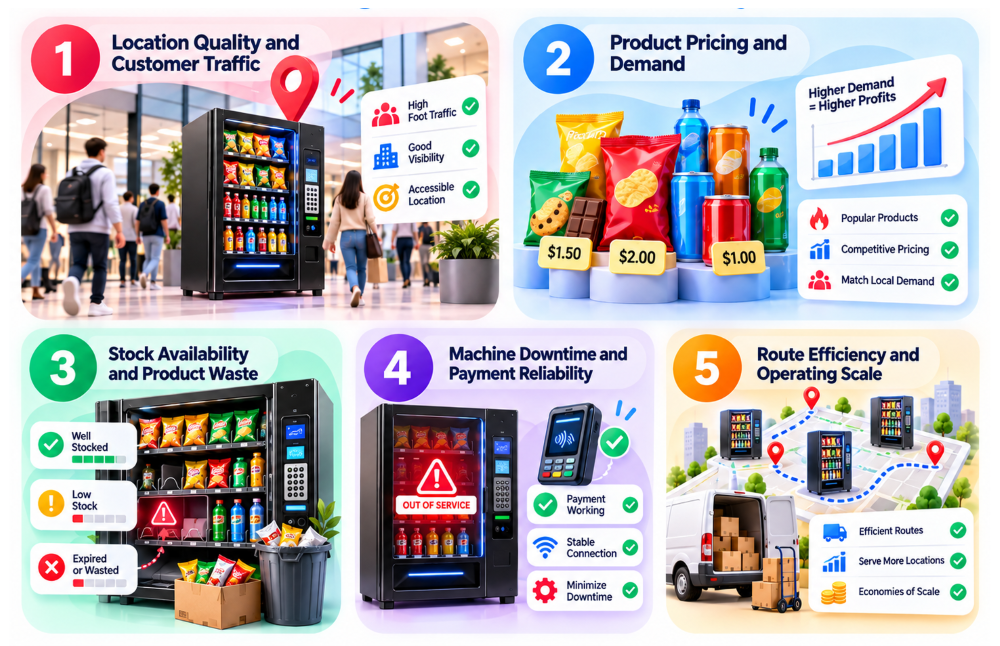
Location Quality and Customer Traffic
Good locations have people who are likely to buy what’s in the machine. Foot traffic alone isn’t enough. Customers need convenient access and products that suit their needs. A machine hidden behind a closed door or placed away from where people spend time will underperform even in a busy building. Trialling a location before committing to long-term terms reduces the risk of paying for space that produces little.
Product Pricing and Demand
Prices need to cover costs and leave a margin without pushing customers toward alternatives. Too low leaves little profit. Too high reduces sales. The right price depends on the product, location, and what similar options nearby cost. Reviewing sales after price changes is more reliable than assuming higher prices will improve earnings.
Stock Availability and Product Waste
Empty slots mean missed sales. Overstocked slow movers tie up cash and risk expiry. Tracking sales rates and adjusting order quantities accordingly finds the balance between running out and over-ordering.
Machine Downtime and Payment Reliability
A machine that’s out of service earns nothing. Payment failures lose sales too, particularly for machines relying heavily on cashless transactions. Monitoring error reports and responding quickly to faults limits the revenue impact. Remote monitoring helps, though what’s available depends on the machine’s hardware and software.
Route Efficiency and Operating Scale
Restocking takes time and fuel. Machines spread across a wide area can make travel costs significant relative to what each machine earns. Grouping machines geographically and planning visits around actual stock needs improves efficiency. Adding more machines increases revenue potential but also increases inventory, service work, and complexity. Growth makes sense when additional profit covers the additional costs.
How Can Operators Improve Vending Machine Profits?
Review sales data regularly. Which products sell consistently, which sit untouched, and when does the machine see the most purchases. Use that to adjust quantities and replace underperforming products.
Revisit restocking schedules. Visiting every machine on a fixed schedule regardless of stock levels wastes trips. Demand-driven scheduling reduces fuel costs and travel time.
Assess location performance honestly. If a machine consistently struggles to cover its costs, investigate whether the product range is wrong, the placement is inconvenient, or the location fee is too high. Sometimes moving a machine is better than continuing to invest in a weak location.
Other practical improvements include negotiating better supplier prices when volumes justify it, checking selling prices against costs and local demand regularly, fixing recurring payment and dispensing problems promptly, and reducing expired stock through demand-based ordering.
How Does Vending Machine Software Help Control Costs?
Managing a handful of machines manually is workable. As the fleet grows, tracking sales, stock, faults, and service visits across multiple locations becomes genuinely difficult without proper tools.
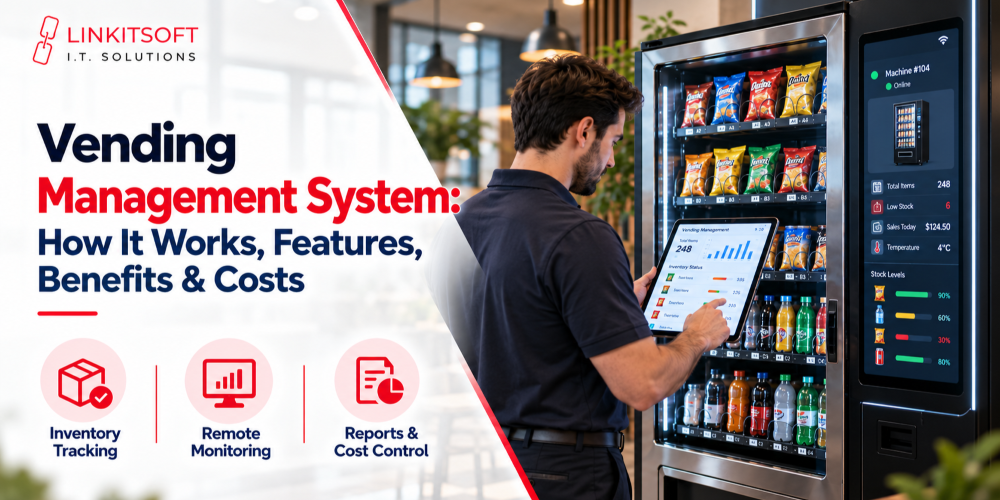
Vending software brings this information together. Sales reports show how products and locations perform over time. Inventory tracking helps reduce both stockouts and overstocking. Remote monitoring can flag payment errors or connectivity problems before they become prolonged outages. Some issues can be resolved without a site visit. Mechanical faults still need someone on the ground.
The financial benefit comes from better use of time, stock, and equipment. Software has its own cost, so the question is whether the information and time savings justify it. For a single basic machine probably not. For a growing operation with multiple locations the answer usually changes.
Is a Vending Machine Business Worth the Investment?
It can be when customer demand is sufficient, location terms are reasonable, and inventory and service costs are managed properly. Adding machines before understanding existing performance often makes problems harder to control rather than easier.
Before investing, estimate realistic monthly sales and subtract product costs, location fees, payment charges, maintenance, transport, software, and other expenses. Include a realistic buffer for slow periods and unexpected repairs. If you’re spending personal time on restocking and servicing, factor that workload into whether the return is actually worthwhile.
Calculate the break-even point: how much the machine needs to earn to cover its costs, including the initial investment over a reasonable period. A machine can generate positive monthly operating profit while still taking a long time to recover the purchase price.
Start with a location where demand can be reasonably assessed, keep accurate records from day one, and review results honestly before expanding.