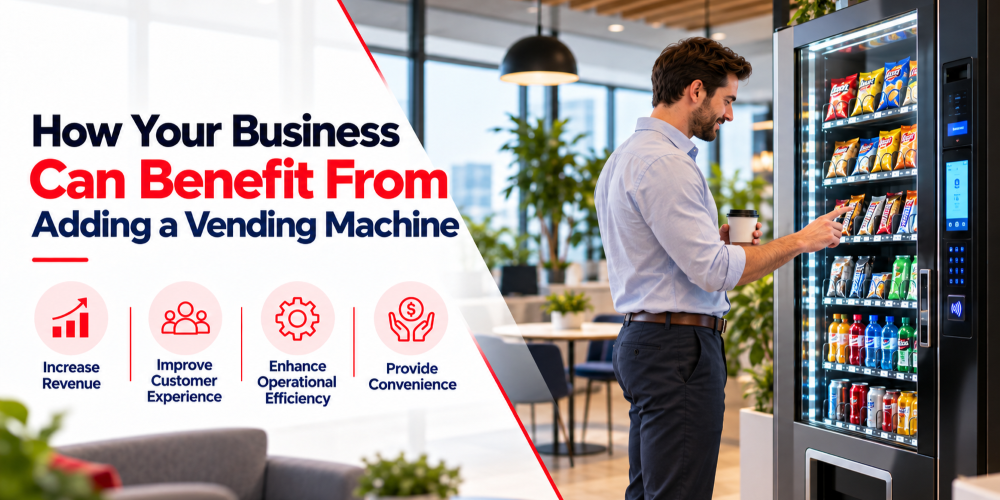
Adding a vending machine to your business is one of those ideas that sounds almost too simple to bother thinking through carefully. It’s just a machine in a corner, right? Stick some snacks in it and collect the money. The reality is a bit different than that, but when it’s done well, it genuinely does make sense for a lot of businesses.
And if it’s done smartly, you don’t have to put in much effort. Let’s learn how a vending machine can benefit your business in this blog.
Why Add a Vending Machine to Your Business?
A vending machine can do more than sell snacks and drinks. It can make everyday essentials easier to access and take some pressure off your staff. The value it brings depends on what people need at your location and how well the machine is managed.
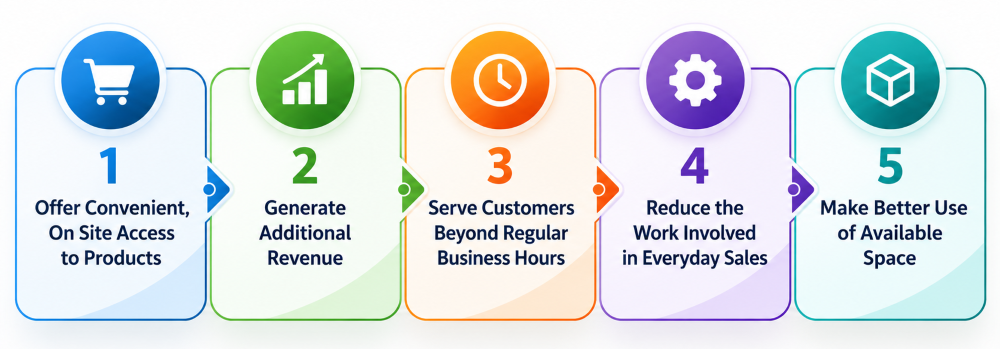
Offer Convenient, On Site Access to Products
Nobody wants to leave a building just to grab a drink or a quick bite during a ten minute break. Hotel guests don’t want to wander out at midnight looking for water. Patients sitting in a waiting room for an hour appreciate having something available nearby.
That’s the core of what a vending machine does well. It puts products where people already are, at the moment they want them. The trick is making sure those products are actually things people at your specific location want to buy. A general office probably does fine with popular snacks and drinks. A gym is going to want water, sports drinks, and something with protein in it. Getting the product mix right is honestly more important than anything else when it comes to whether the machine earns its keep.
Generate Additional Revenue
A well-placed machine with the right products can bring in extra income without much active selling on your part. That’s appealing, and for many businesses it works out well.
That said, sales figures aren’t the same as profit. You’re buying products at a cost, paying payment processing fees, keeping the machine running, and potentially paying for the space it occupies. A machine that moves a lot of low-margin products can actually underperform compared to one selling fewer items at better margins.
Treat vending as an additional sales channel rather than a guaranteed income stream. Check the numbers periodically and be willing to adjust products, pricing, or even the machine’s location if things aren’t adding up.
Serve Customers Beyond Regular Business Hours
This is where vending machines have a clear advantage over any staffed alternative. When your team goes home, the machine keeps working. Hotels with late arrivals, offices with staff on evening shifts, gyms that open at 5 am, healthcare facilities running overnight. The machine doesn’t need anyone there to operate it.
Just don’t confuse “it runs without staff” with “it runs without any attention at all.” Products still run out, payment systems can develop faults, and dispensing mechanisms occasionally need looking at. The maintenance side of things doesn’t go away; it just doesn’t require someone standing next to the machine all day.
Reduce the Work Involved in Everyday Sales
If your staff is currently handling small purchases manually, that’s time and attention going somewhere that a machine could handle on its own. Every transaction means someone stopping what they’re doing, taking the payment, handing over the product. Multiply that by dozens of daily interactions and it adds up.
A vending machine takes the whole process off your staff’s plates. Customers serve themselves, payment happens automatically, and your team can focus on whatever actually needs them.
Worth keeping in mind that someone still needs to restock, clean, and deal with the occasional fault. It’s lower-touch than manual selling, not completely hands-off.
Make Better Use of Available Space
A quiet corner of your lobby, an unused section of a break room, a bit of wall space near a waiting area. These spots sit there doing nothing until you put something in them. A vending machine can turn underused space into something that actively serves people visiting or working in your building.
The placement does need to make sense, though. The machine has to be visible and reachable, positioned where people can stop without getting in the way of foot traffic or doorways. Electricity access and enough space for restocking visits need to factor in too.
Which Businesses Can Benefit From Vending Machines?
A lot of different businesses work well with vending machines, but the right products depend entirely on who’s using the space.
- Offices: Snacks, drinks, and quick refreshments can help employees get what they need without leaving the workplace.
- Hotels: Guests may appreciate access to bottled water, packaged snacks, toiletries, and other travel essentials outside reception hours.
- Gyms and fitness centers: Water, sports drinks, protein snacks, and other fitness related products can suit customers before or after a workout.
- Schools and colleges: Depending on school policies and local regulations, machines can provide approved snacks, drinks, and everyday supplies for students and staff.
- Healthcare facilities: Patients, visitors, and staff may benefit from refreshments and basic convenience items, particularly where waiting times are long.
- Retail locations: A vending machine can offer complementary products or essentials that shoppers may want while visiting the premises.
The type of business gives you a starting point but actual demand is what really matters. Think about who’s in the space, when they’re there, what they’re likely to want, and what’s already available nearby before you decide what to put in the machine.
What Should You Consider Before Adding a Vending Machine?
Before buying or installing a machine, take some time to work out whether it fits your space, customers, and budget. A little planning can help prevent unnecessary expenses later.
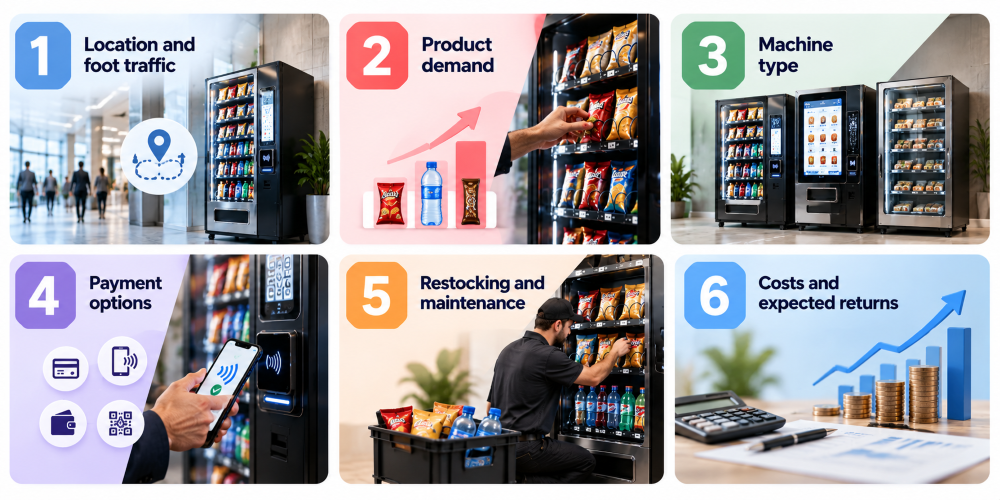
Location and foot traffic
A busy entrance doesn’t automatically mean sales. People rushing past don’t stop to buy things. You want somewhere people actually pause or spend time, whether that’s a break room, a waiting area, or a spot near the lift that gets regular traffic.
Product demand
Base what you stock on what people at your location actually want, not what seems like a reasonable guess. Think about preferences, price sensitivity, shelf life, and whether the same products are already easy to get nearby.
Machine type
Different products need different machines. Refrigeration, capacity, dispensing mechanisms. Make sure whatever you choose can actually handle what you’re planning to sell. A machine that looks the part but can’t reliably dispense your products is worse than no machine at all.
Payment options
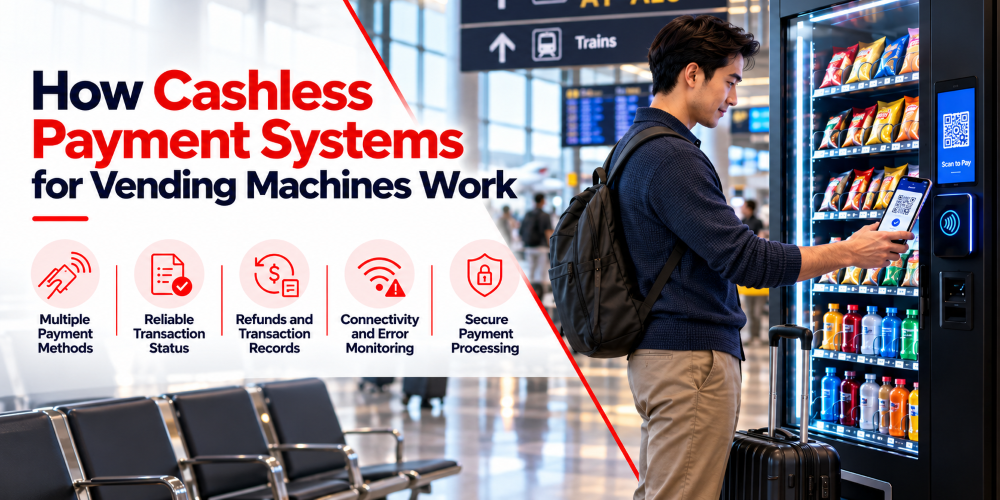
Think about how your customers prefer to pay. Cash, card, contactless, mobile. Not all machines support all methods and adding cashless capability may involve extra hardware or ongoing service fees.
Restocking and maintenance
Who’s going to fill it, clean it, check expiry dates, and sort out faults? If you’re working with an outside operator, get clarity upfront on who handles what. These responsibilities matter, and assuming someone else covers them is how things fall through the cracks.
Costs and expected returns
Add up the machine cost or lease payments, initial stock, installation, electricity, payment fees, repairs, and any commission or location charges. Then compare that honestly with what you can realistically expect to sell. If the numbers don’t work out on paper, they probably won’t work out in practice either.
The other big decision is whether to own and run the machine yourself or work with a vending service provider. Owning it gives you full control over pricing and products, but you take on all the responsibility and costs. A provider handles more of the day-to-day, but the revenue arrangement will depend entirely on the terms you negotiate.
How Can Vending Machine Software Help Manage Operations?
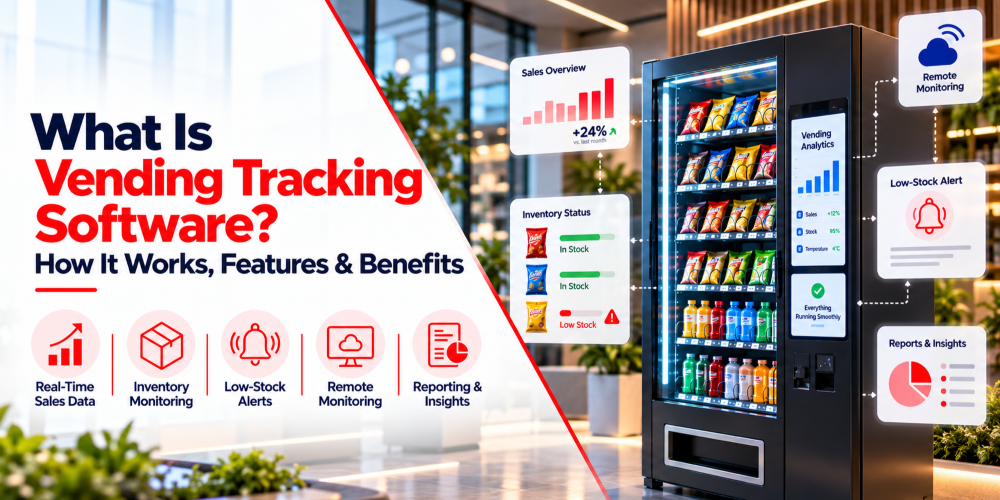
Once a machine is up and running, keeping track of what’s selling and what needs attention becomes part of the job. Vending software makes this significantly easier, particularly as you add more machines or install them across different locations.
Sales Tracking and Product Performance
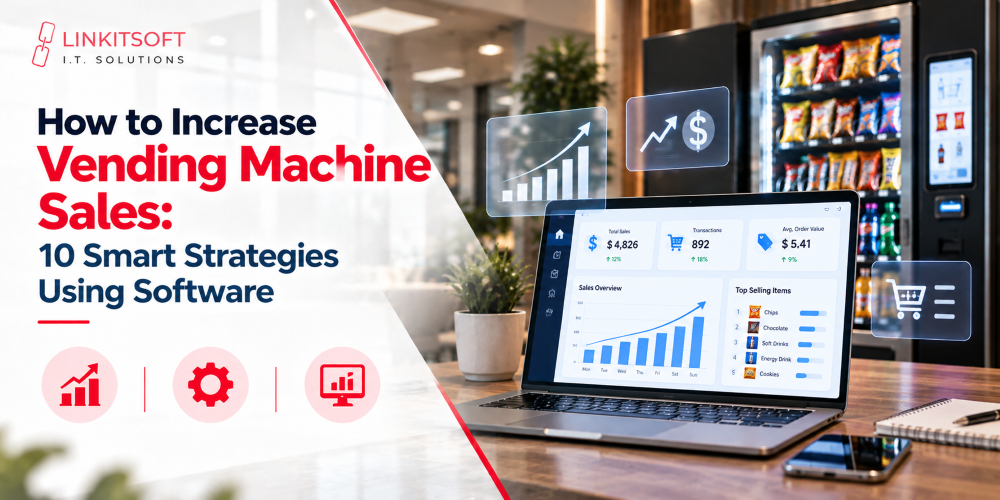
Sales tracking shows you which products customers actually buy and when. That information is directly useful for deciding what to reorder, what to drop, and whether a particular product deserves more space in the machine.
Inventory Monitoring and Restocking Alerts
Inventory monitoring can flag when stock is running low so you’re planning a restocking visit before things sell out rather than after. Some platforms send alerts when specific products hit a minimum threshold.
Remote Machine Monitoring
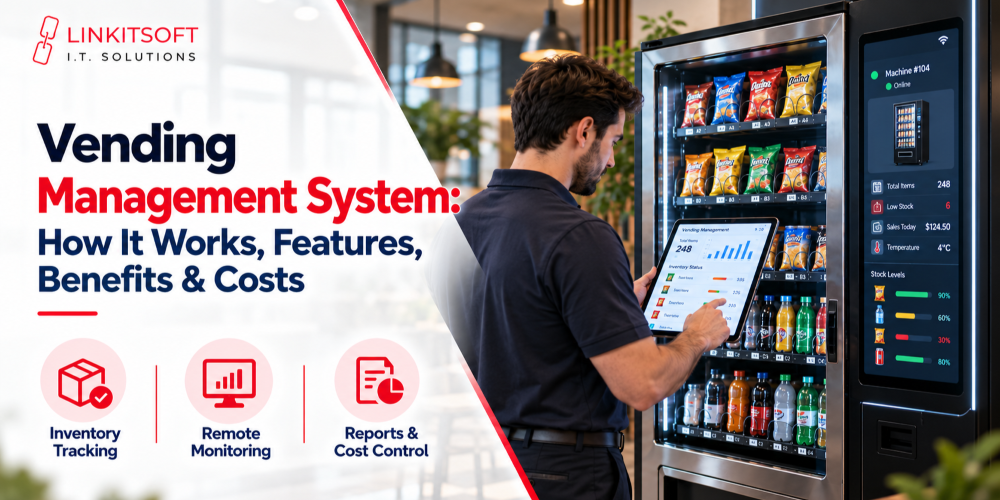
Remote monitoring is useful when machines are spread across different areas or buildings. A central view of machine status, connectivity, and reported faults means you can investigate some problems without making a trip to the machine first.
Managing Multiple Machines in One Place
For a single basic machine, this level of tooling probably isn’t necessary. But once you’re managing several machines, having everything in one place saves time and makes it easier to spot which machines are earning their keep and which ones need a rethink.