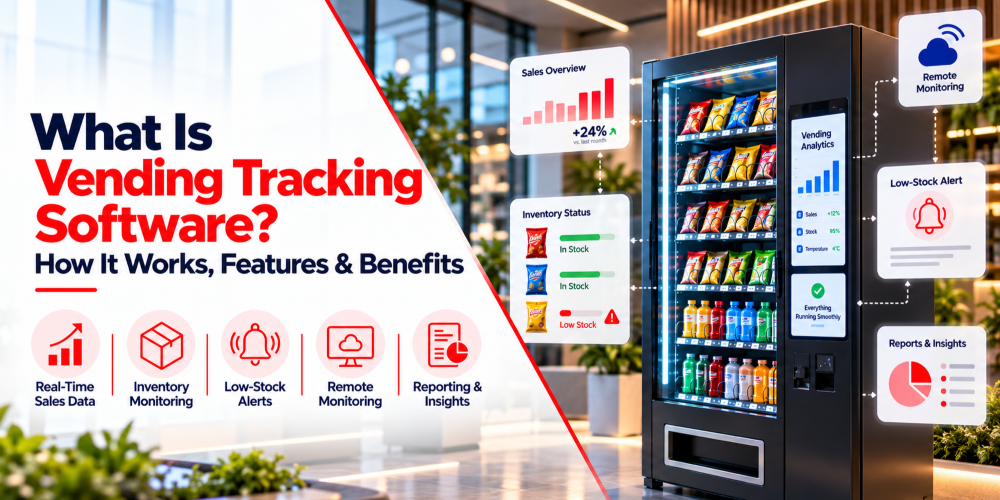
Vending tracking software is a digital solution that helps businesses monitor inventory, sales, and machine performance from a centralized dashboard.
Without proper tracking, operators risk stock shortages, missed sales, and delayed maintenance. The software helps address these issues through automated tracking, alerts, and reporting.
In this guide, you’ll learn how vending tracking software works, its features, benefits, costs, and how to choose the right solution.
How Does Vending Tracking Software Work?
Vending tracking software collects operational data from compatible machines and organizes it into reports that operators can access remotely.
The tracking process typically involves the following steps.
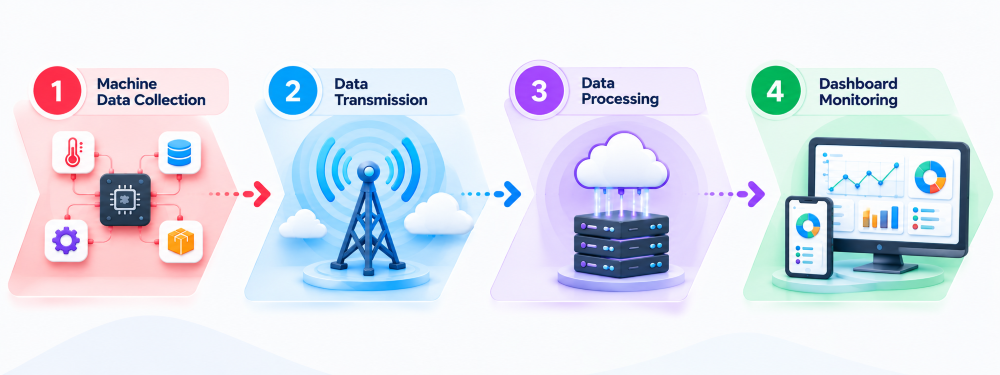
1. Machine Data Collection
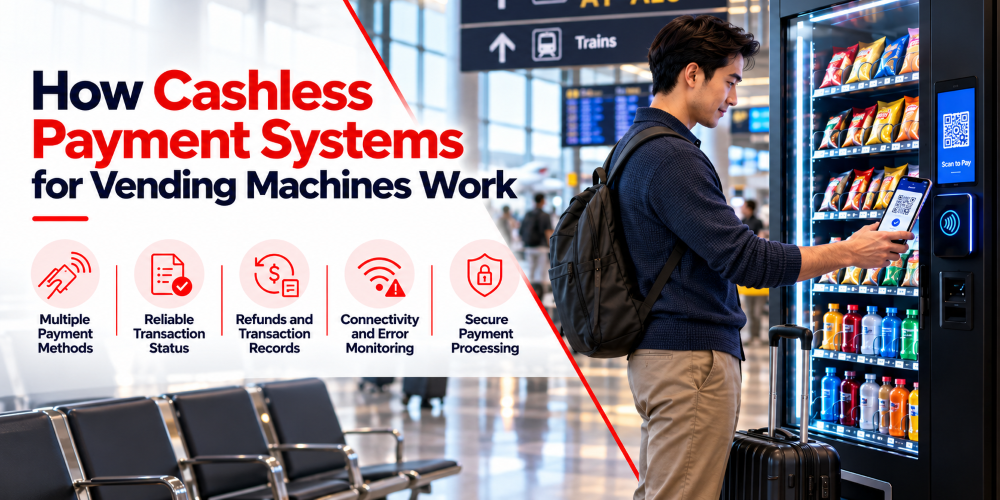
The system collects available information through vending controllers, telemetry devices, payment integrations, or DEX audit records.
Depending on compatibility, this may include sales activity, product movement, and machine status.
2. Data Transmission
Connected equipment transfers information to a remote platform through cellular, Wi-Fi, or other supported network connections.
Updates may occur in real time or at scheduled intervals, depending on the setup.
3. Data Processing
The software organizes collected records into useful information, such as:
- Product sales and transaction history.
- Estimated inventory levels.
- Machine errors and connectivity status.
- Restocking and service records.
4. Dashboard Monitoring
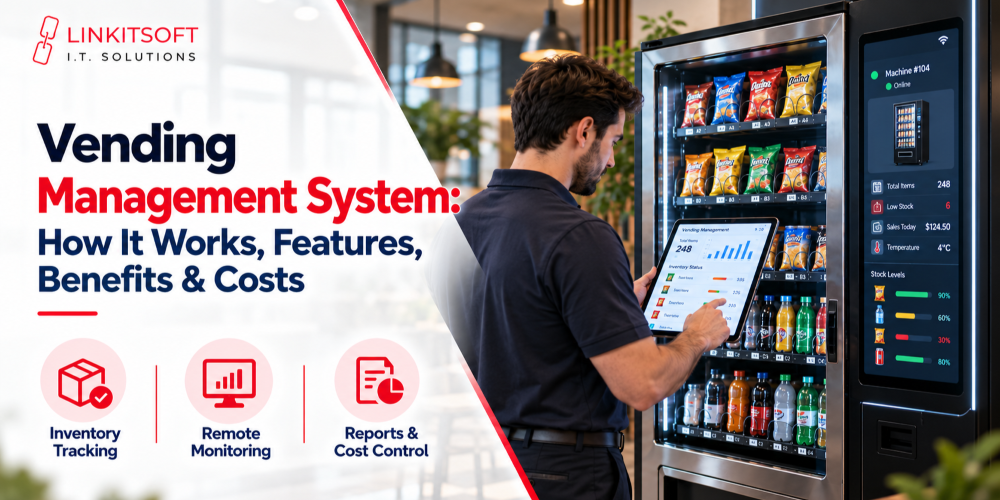
Operators access the processed information through a web dashboard or mobile application. They can review machine activity, identify stock shortages, and respond to operational alerts.
What Can Vending Tracking Software Monitor?
Tracking capabilities depend on the connected hardware, available machine data, and software integrations.
Common tracking categories include:
- Inventory Levels: Monitor available products and identify low-stock selections.
- Sales Activity: Review transactions, product sales, and revenue records.
- Machine Status: Identify offline machines and supported fault notifications.
- Restocking Activity: Record replenishment dates, quantities, and service visits.
- Performance Trends: Compare product demand and machine activity over time.
Inventory figures may be calculated from recorded sales and restocking activity. Accurate information therefore depends on proper product mapping and inventory updates.
What Are the Key Features of Vending Tracking Software?
Vending tracking software provides essential tools to monitor machine activity, track inventory, and manage operational data through a centralized platform.

Automated Inventory Tracking
Automatically updates stock records based on recorded sales and restocking activity. Operators can monitor product availability, identify low-stock items, and maintain better inventory accuracy.
Sales Tracking and Reporting
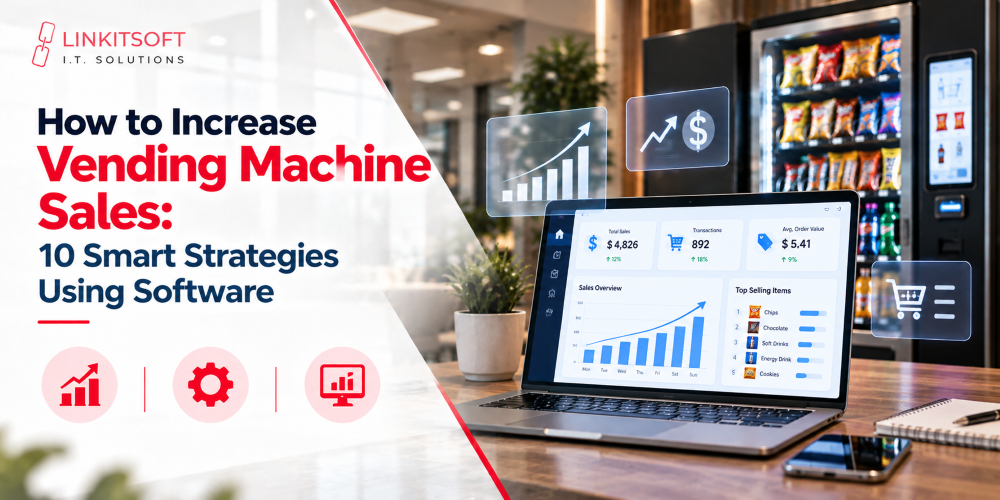
Records transactions, revenue, and product sales across connected machines. Detailed reports help operators analyze sales patterns and compare performance across locations.
Machine Monitoring and Alerts
Tracks machine connectivity, operating status, and supported technical errors. Automated alerts notify operators about equipment issues, connectivity failures, or stock shortages.
Restocking History and Records
Maintains records of replenishment dates, product quantities, and inventory adjustments. This information helps operators review restocking activities and maintain accurate stock records.
Centralized Tracking Dashboard
Provides a unified view of inventory, transactions, machine status, and alerts. Operators can access information from multiple vending machines without using separate systems.
Data Integration and Export
Supports connections with compatible payment systems, telemetry devices, and business applications. Data export features simplify reporting, record management, and information sharing.
User Access and Permissions
Allows businesses to assign access levels to operators, technicians, and managers. Role-based permissions help protect sensitive information and control tracking activities.
What Are the Benefits of Vending Tracking Software?
Vending tracking software helps businesses improve operational efficiency, reduce manual work, and make informed decisions using accurate machine data.
Reduces Unnecessary Machine Visits
Remote access to inventory and machine information reduces the need for frequent physical inspections. Operators can focus on locations that actually require attention.
Helps Prevent Product Stockouts
Low-stock alerts help operators identify products that need replenishment. This reduces the risk of empty selections and missed sales opportunities.
Improves Restocking Efficiency
Inventory and sales insights help businesses plan replenishment schedules and prepare accurate stock quantities. This can reduce unnecessary trips and improve service efficiency.
Enables Faster Issue Resolution
Machine alerts help operators identify technical problems and connectivity failures earlier. Faster identification allows maintenance teams to prioritize repairs and minimize potential downtime.
Supports Better Business Decisions
Sales trends and performance reports help operators identify popular products, evaluate locations, and adjust inventory strategies based on customer demand.
Simplifies Multi-Location Operations
Centralized monitoring allows businesses to oversee several vending machines from one platform. This improves operational visibility and reduces the complexity of managing multiple locations.
Helps Reduce Operating Costs
Better visibility into machine activity helps operators avoid unnecessary service trips, optimize replenishment schedules, and reduce wasted resources, supporting more cost-efficient vending operations.
Vending Tracking Software vs. Vending Management Software
Although these terms are closely related, they describe different levels of functionality.
| Vending Tracking Software | Vending Management Software |
| Focuses on collecting and monitoring operational data | Covers broader vending business operations |
| Tracks inventory, sales, and machine status | May include purchasing, warehouse control, and route management |
| Provides reports and alerts | Supports wider operational workflows |
| Helps identify issues and service requirements | Helps coordinate and manage business activities |
Vending tracking is often a core component of vending management software. Businesses needing only visibility into machine activity may not require a complete management platform.
Can Vending Tracking Software Work With Existing Machines?
Yes, some existing vending machines can support tracking software through compatible telemetry devices, controllers, or payment integrations.
However, compatibility depends on several factors:
- Available DEX or MDB interfaces.
- Supported telemetry hardware.
- Payment provider integrations.
- Machine data access and connectivity.
Older machines may require additional hardware, and some may offer only limited tracking capabilities.
Businesses should verify compatibility before selecting a platform.
How Much Does Vending Tracking Software Cost?
Vending tracking software costs depend on the features, deployment requirements, and number of connected machines.
Key pricing factors include:
- Software Subscription: Ongoing access, reporting, and monitoring features.
- Telemetry Hardware: Devices needed to collect machine data.
- System Integration: Connecting machines, payment systems, and existing tools.
- Customization: Developing specialized tracking features and dashboards.
- Maintenance and Support: Hosting, software updates, and technical assistance.
Cloud-based platforms commonly use recurring subscription models, while custom-built solutions involve development and ongoing operating expenses.
Businesses should compare the total cost of ownership rather than software fees alone.
How Do You Choose the Right Vending Tracking Software?
The right tracking solution should provide reliable data, support existing equipment, and remain practical as operations grow.
Consider these factors before choosing a platform.
Machine Compatibility
Verify support for your vending controllers, telemetry devices, and payment systems.
Tracking Accuracy
Evaluate how frequently records update and how the platform handles missing transactions or incorrect inventory counts.
Dashboard Usability
Choose software that makes stock information, sales reports, and machine alerts easy to access.
Integration and Scalability
Ensure the platform can connect with existing business systems and accommodate additional machines.
Security and Support
Review data protection, user permissions, technical assistance, and ongoing maintenance requirements.
How Linkitsoft Helps Businesses With Vending Tracking Software
Every vending operation has different tracking requirements. Linkitsoft develops custom vending software solutions that help businesses collect machine data, improve visibility, and simplify operational workflows.
Our services include:
- Custom Tracking Software: Solutions tailored to business requirements.
- Inventory Monitoring: Track product movement and stock availability.
- Sales Reporting: Review transactions and machine performance.
- Telemetry Integration: Connect compatible vending hardware and data sources.
- Centralized Dashboards: Access tracking information across multiple locations.
- API Development: Connect vending data with other business applications.
Whether you’re introducing tracking to existing equipment or developing a new platform, Linkitsoft can help build a solution around your operational needs.