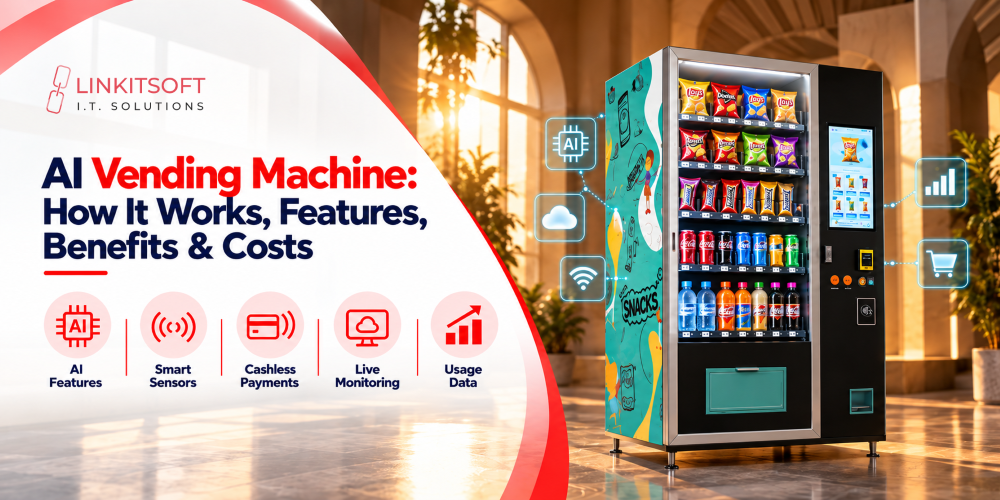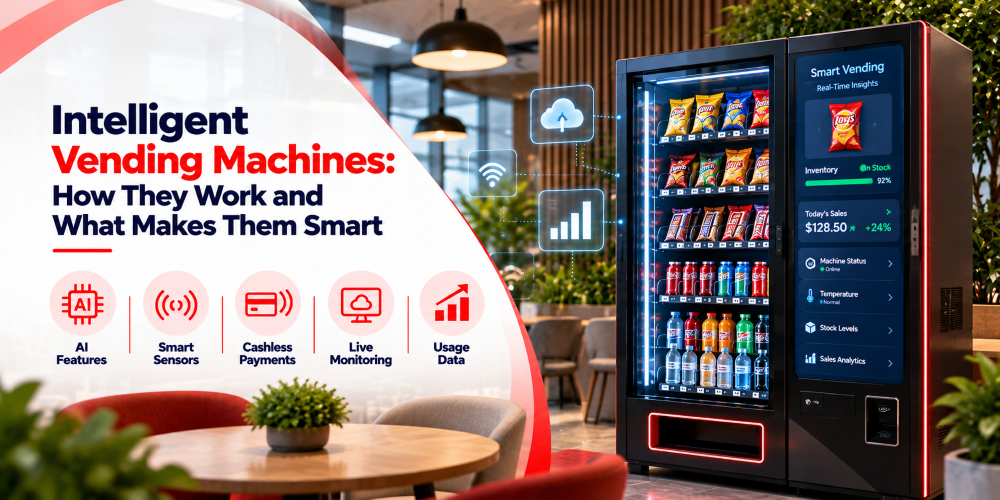
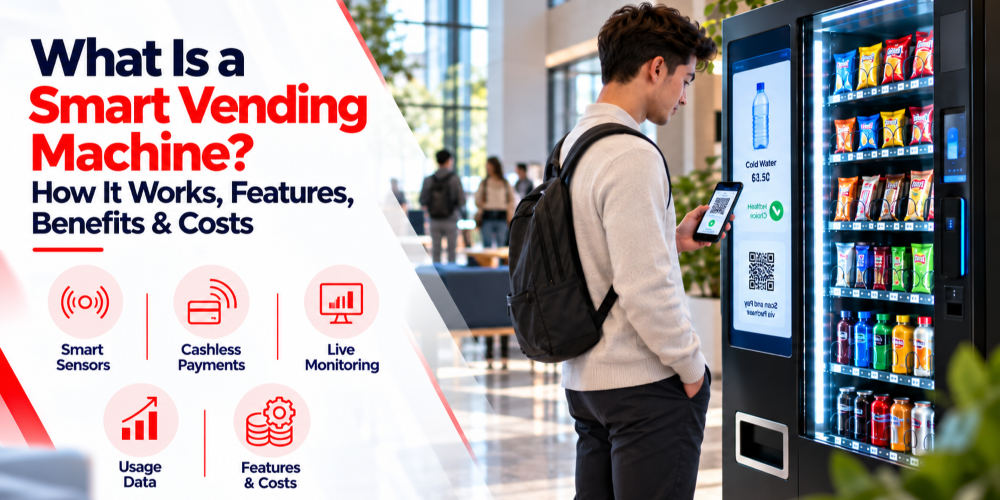
A smart vending machine is an automated retail system that uses digital payments, IoT connectivity, and management software to sell products, track inventory, and remotely monitor operations. Advanced models may also use AI for automated checkout.
Unlike traditional machines, smart vending machines help businesses reduce manual work, improve efficiency, and offer convenient 24/7 shopping.
In this guide, you’ll learn how smart vending machines work, their features, types, benefits, costs, and what to consider before investing.
How Does a Smart Vending Machine Work?
A smart vending machine uses connected hardware and software to automate product selection, payments, dispensing, and inventory tracking. The process varies depending on the machine’s technology.
Product Selection or Recognition
Customers select products through a touchscreen or buttons, while advanced smart coolers use automated recognition technology.
Common methods include:
- Touchscreens: Allow customers to browse and select products.
- Cameras and AI: Identify products using computer vision.
- RFID and Sensors: Track items removed from smart cabinets.
Payment Processing
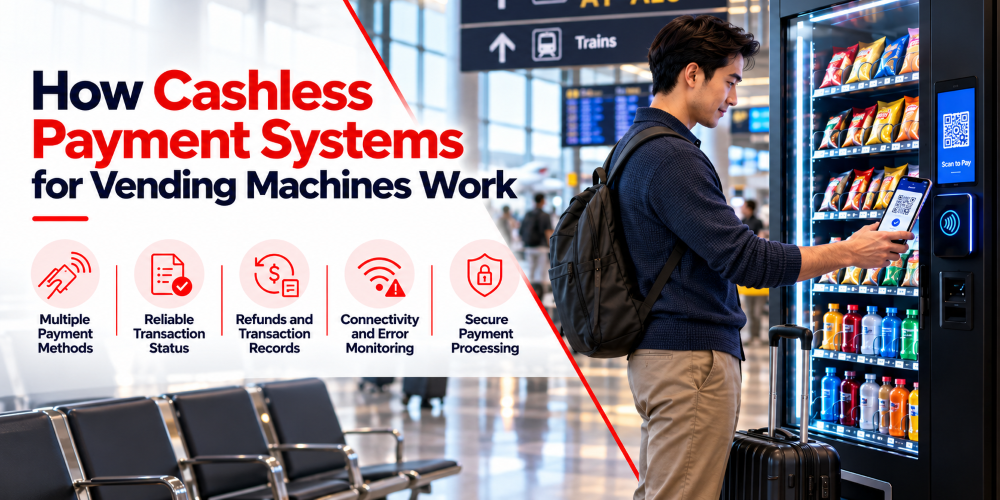
Smart vending machines process transactions through integrated payment systems.
Supported payment methods may include:
- Credit and debit cards.
- Contactless mobile wallets.
- QR-code payments.
- Cash, where supported.
Traditional dispensing machines generally authorize payments before releasing products, while some grab-and-go systems calculate purchases after product selection.
Product Dispensing or Retrieval
Once payment is authorized, the machine delivers the selected product or allows customers to retrieve it.
- Traditional Systems: Use motors, spiral coils, or conveyors to dispense products.
- Smart Coolers: Allow customers to remove products directly from shelves.
Both systems can record completed transactions through connected software.
Inventory Updates
Compatible systems automatically update inventory records after successful transactions.
This helps operators:
- Monitor available stock levels.
- Identify low-stock products.
- Plan timely replenishment.
Inventory accuracy depends on the machine’s tracking technology and restocking records.
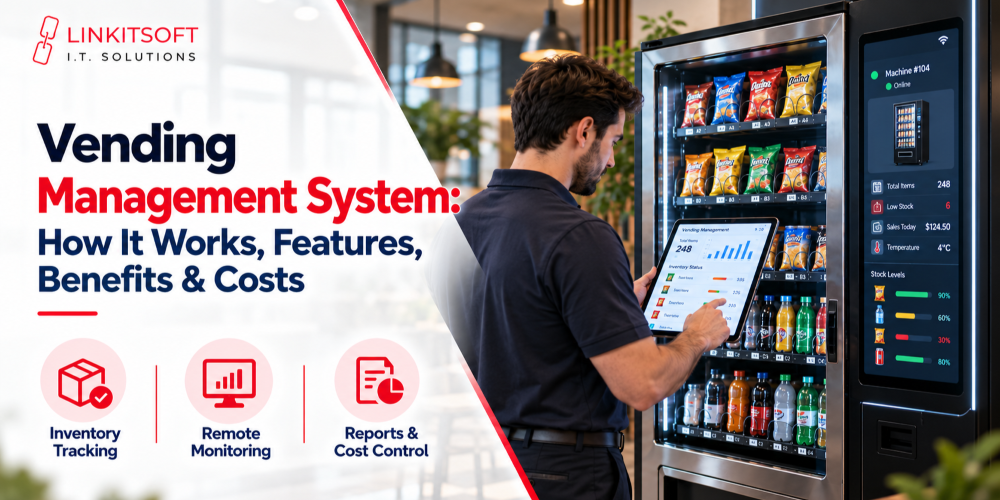
Remote Monitoring and Reporting
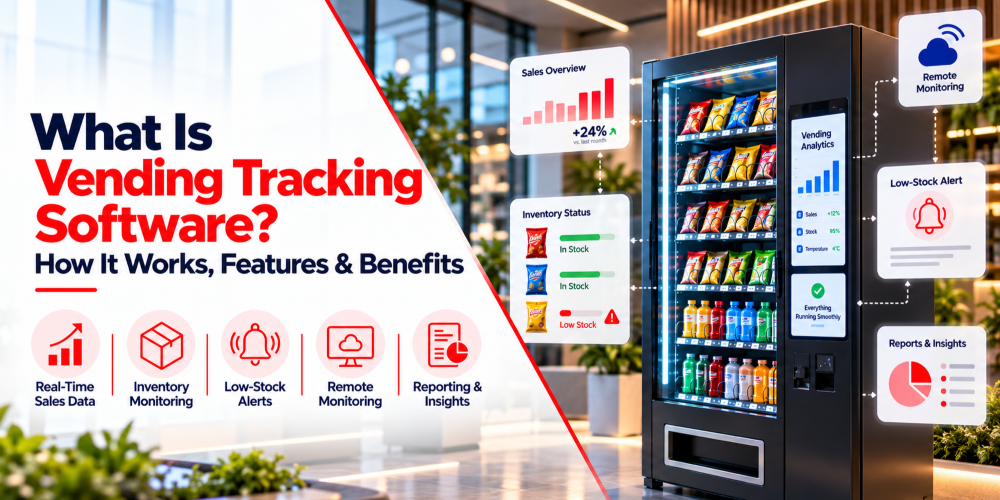
Connected machines send operational data to cloud-based management platforms.
Operators can monitor:
- Sales: Transactions and product performance.
- Inventory: Stock levels and restocking needs.
- Machine Status: Connectivity and technical alerts.
This allows businesses to manage vending operations remotely and reduce unnecessary on-site inspections.
What Technology Is Used in Smart Vending Machines?
Smart vending machines use connected technologies to automate purchases, track inventory, and simplify operations.

Internet of Things (IoT) Connectivity
IoT connects vending machines to remote platforms through Wi-Fi, Ethernet, or cellular networks, enabling monitoring, reporting, and remote management.
Cashless Payment Technology
Integrated payment systems process card and mobile wallet transactions, allowing customers to purchase products without cash.
Sensors and Vending Controllers
Controllers manage product selection and dispensing, while sensors monitor deliveries, temperature, door activity, and inventory.
Artificial Intelligence
AI-powered systems can recognize products, analyze sales patterns, and support smarter decisions. However, not all smart vending machines require AI.
Vending Management Software
Centralized software helps operators track inventory, monitor sales, receive alerts, and manage multiple machines from one dashboard.
What Are the Main Features of Smart Vending Machines?
Smart vending machines can offer different capabilities depending on the equipment and software used.
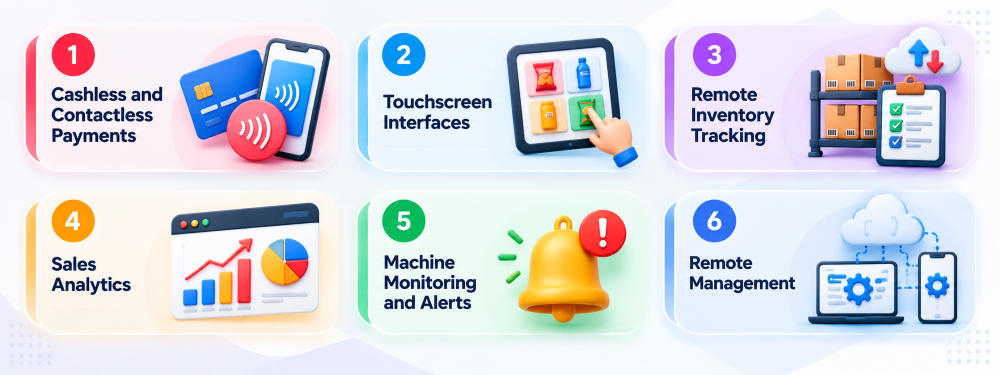
Cashless and Contactless Payments
Customers can complete purchases using supported digital payment methods without carrying physical cash.
Touchscreen Interfaces
Interactive displays can present product images, prices, available selections, and purchasing instructions.
Remote Inventory Tracking
Connected inventory records help operators identify machines that need replenishment and monitor product availability.
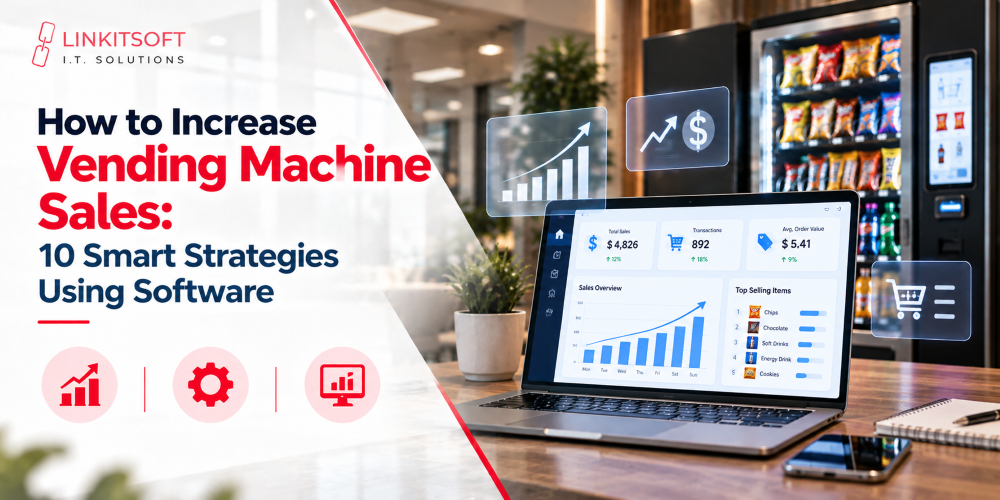
Sales Analytics
Reporting tools can show which products sell most frequently, how machines perform at different locations, and when transactions occur.
Machine Monitoring and Alerts
Compatible systems can notify operators about connectivity failures, machine errors, low stock, or other conditions requiring attention.
Remote Management
Some vending platforms allow authorized users to update prices, configure products, or manage machines through an online dashboard.
Not all features are available on every machine. Businesses should confirm hardware compatibility and software capabilities before purchasing.
Smart Vending Machines vs. Traditional Vending Machines
The main difference between smart and traditional vending equipment is the level of connectivity and operational control.
| Feature | Traditional Vending Machine | Smart Vending Machine |
| Product selection | Usually buttons or keypads | Buttons, touchscreens, or grab-and-go |
| Payments | Cash or cards, depending on model | Commonly digital and contactless |
| Inventory tracking | Often involves manual inspection | Can provide connected inventory data |
| Sales reporting | Basic or manually collected | Centralized reporting and analytics |
| Remote monitoring | Limited without upgrades | Available on compatible systems |
| AI technology | Usually not included | Available on selected advanced models |
| Fleet management | Often requires individual machine servicing | Can support centralized management |
Traditional vending machines remain suitable for basic needs, while smart features become more valuable as operations grow. Businesses can also upgrade compatible machines with cashless payments and remote monitoring instead of replacing them.
What Are the Different Types of Smart Vending Machines?
Smart vending machines come in different types to serve various products and business needs.
Smart Snack and Beverage Vending Machines
These machines sell snacks, drinks, and convenience products using automated dispensing, cashless payments, and remote monitoring.
AI-Powered Smart Coolers
Smart coolers use cameras and sensors to recognize products customers take from refrigerated shelves, enabling automated checkout in supported models.
Fresh Food Vending Machines
Refrigerated machines offer prepared meals, sandwiches, and beverages while maintaining appropriate storage temperatures for food safety.
Specialty Product Vending Machines
These machines sell electronics accessories, personal care items, and other products using customized dispensing systems or smart lockers.
What Are the Benefits of Smart Vending Machines?
Smart vending machines offer convenient shopping experiences while helping businesses reduce manual work, improve inventory control, and manage operations more efficiently.
Convenient Access to Products
Smart vending machines allow customers to purchase products without visiting a staffed checkout counter. They can operate around the clock, provided they have power, sufficient stock, and functioning payment systems.
Key benefits include:
- 24/7 access to snacks, beverages, and other products.
- Convenient self-service shopping without staff assistance.
- Easy access to products in offices, hospitals, and public spaces.
Faster Purchasing
Smart vending machines simplify transactions through contactless payments and interactive interfaces. Some advanced models also support grab-and-go shopping.
This provides:
- Faster checkout with cards and mobile wallets.
- Easy product selection through touchscreen interfaces.
- Convenient shopping with fewer steps in supported grab-and-go models.
Reduced Manual Inventory Checks
Connected vending systems allow operators to monitor stock levels remotely instead of physically checking every machine.
Key advantages include:
- Real-time or frequently updated inventory information.
- Fewer unnecessary visits to check product availability.
- Low-stock alerts to support timely replenishment.
More Efficient Restocking
Smart vending software helps operators plan replenishment based on inventory records and product demand.
This allows businesses to:
- Identify which machines need restocking.
- Prepare product quantities based on sales data.
- Reduce unnecessary trips and improve restocking efficiency.
Better Sales Decisions
Sales analytics provide insights into customer purchasing patterns, popular products, and machine performance.
Businesses can use this information to:
- Identify best-selling and slow-moving products.
- Adjust product selection based on customer demand.
- Make informed pricing and inventory decisions.
- Compare sales performance across locations.
Easier Management Across Locations
Businesses operating multiple vending machines can use centralized dashboards to monitor operations from one platform.
This helps operators:
- Track sales and inventory across different machines.
- Monitor machine status and technical alerts remotely.
- Manage multiple locations without separate manual records.
- Simplify day-to-day vending operations.
Overall, smart vending machines can improve operational efficiency and customer convenience. However, actual results depend on machine reliability, location quality, customer demand, and effective management.
Where Are Smart Vending Machines Commonly Used?
Smart vending machines can support unattended retail in a wide range of commercial and public environments.
Offices and Corporate Workplaces
Employees can access snacks, drinks, and refreshments without leaving the workplace. This is particularly useful for offices with extended hours or rotating shifts.
Shopping Malls and Retail Spaces
Vending machines provide an additional way to sell convenience products without operating a fully staffed retail counter.
Airports and Transportation Hubs
Travelers can purchase refreshments, accessories, and everyday essentials outside regular store hours.
Hospitals and Healthcare Facilities
Hospitals can use automated vending to provide refreshments and selected convenience products for staff and visitors.
Schools and Universities
Educational institutions may install vending machines for beverages, approved snacks, and everyday supplies.
Hotels and Residential Buildings
Hotels, apartments, and residential facilities can offer products through automated retail equipment without maintaining a dedicated shop.
The suitability of each location depends on customer traffic, available space, electrical requirements, and expected demand.
What Are the Challenges of Smart Vending Machines?
Although smart vending machines can improve operations, they are not maintenance-free systems.
Businesses should understand their limitations before investing.
Higher Initial Investment
Advanced equipment with touchscreens, sensors, AI recognition, and integrated payment technology can cost more than basic machines. Additional installation and software expenses may increase the total investment.
Connectivity Requirements
Many connected features depend on reliable network access. An interruption can affect reporting, remote monitoring, and certain payment functions. Whether purchases can continue offline depends on the hardware and payment configuration.
Maintenance and Technical Support
Smart machines contain mechanical, electronic, and software components that may require servicing. Operators should plan for regular maintenance, updates, cleaning, and replacement parts.
Payment Security and Privacy
Electronic transactions must be handled using appropriate payment security measures. Machines using cameras, customer accounts, or other data collection technologies may also require privacy safeguards. The right system should balance functionality with operational reliability and manageable costs.
How Much Does a Smart Vending Machine Cost?
The cost of a smart vending machine depends on its hardware, size, product capacity, refrigeration requirements, payment system, and software features.
A basic connected snack machine and an AI-powered refrigerated cabinet may have substantially different prices. Businesses should evaluate the following cost categories.
Equipment Purchase or Leasing
Machine costs depend on whether the business purchases new equipment, buys a refurbished machine, or uses a leasing arrangement. Touchscreens, refrigeration, specialized dispensing systems, and recognition sensors can affect the price.
Payment Systems and Software
Electronic payment processing may involve transaction fees, equipment charges, or ongoing service costs. Some vending management platforms also require subscriptions.
Installation and Connectivity
Additional expenses can include transportation, electrical preparation, network connectivity, and initial configuration.
Inventory and Ongoing Operations
Operators must purchase products and cover expenses such as electricity, cleaning, maintenance, location fees, and restocking.
The total cost of ownership matters more than the initial machine price alone.
Before investing, businesses should estimate their expected sales and compare them with both fixed and variable operating costs.
Are Smart Vending Machines Profitable?
Smart vending machines can be profitable in high-demand locations with suitable products and controlled costs.
Key profitability factors include:
- Location: High foot traffic drives sales.
- Products: Popular items improve revenue.
- Inventory: Proper stocking reduces waste.
- Operating Costs: Fees and maintenance affect profits.
- Reliability: Less downtime prevents lost sales.
Smart vending software helps track sales, inventory, and machine performance.
Operating Profit = Revenue − Product Costs − Operating Expenses
Ultimately, location, customer demand, and efficient management determine profitability.
How Do You Choose the Right Smart Vending Machine?
Businesses should choose equipment based on their operational needs rather than the number of advanced features advertised.
Identify Your Products and Customers
Understand what customers are likely to buy, how often they purchase, and whether products require refrigeration or specialized storage conditions.
Evaluate Machine Capacity
Select a machine with enough variety and storage capacity to meet expected demand without creating unnecessary space or restocking costs.
Check Payment Compatibility
Make sure the machine supports payment methods your customers prefer, including cards, mobile wallets, or cash where necessary and available.
Review Management Software
Choose management software that supports inventory tracking, sales reporting, machine alerts, and remote monitoring across one or multiple business locations.
Assess Reliability and Support
Review warranty coverage, replacement parts availability, maintenance needs, software updates, and technical support to reduce downtime and unexpected operating expenses.
Compare Total Ownership Costs
Calculate the total investment, including equipment, installation, payment fees, software subscriptions, electricity, routine maintenance, repairs, and other ongoing operating costs.
How Linkitsoft Adds Value to Your Smart Vending Business
Linkitsoft provides custom smart vending software solutions that simplify operations, connect existing systems, and support business growth.
Our solutions include:
- Custom Software: Built around your business needs.
- Easy Integrations: Connect machines, payments, and third-party systems.
- Inventory Management: Track stock and simplify restocking.
- Remote Monitoring: Manage machines from one dashboard.
- Scalable Solutions: Expand across multiple locations.
From upgrading existing machines to launching new systems, Linkitsoft helps businesses build smarter vending operations.
What Is the Future of Smart Vending Machines?
AI, IoT, and automation are making smart vending machines more efficient and easier to manage.
Key future developments include:
- AI Recognition: Automated product identification and checkout.
- Predictive Maintenance: Early detection of machine issues.
- Smart Inventory: Demand forecasting and efficient restocking.
- Personalized Shopping: Targeted offers and recommendations.
- Advanced Analytics: Better sales and pricing decisions.
- Remote Management: Centralized control of multiple machines.
The future of smart vending focuses on reliable technology, intelligent automation, and operational efficiency.