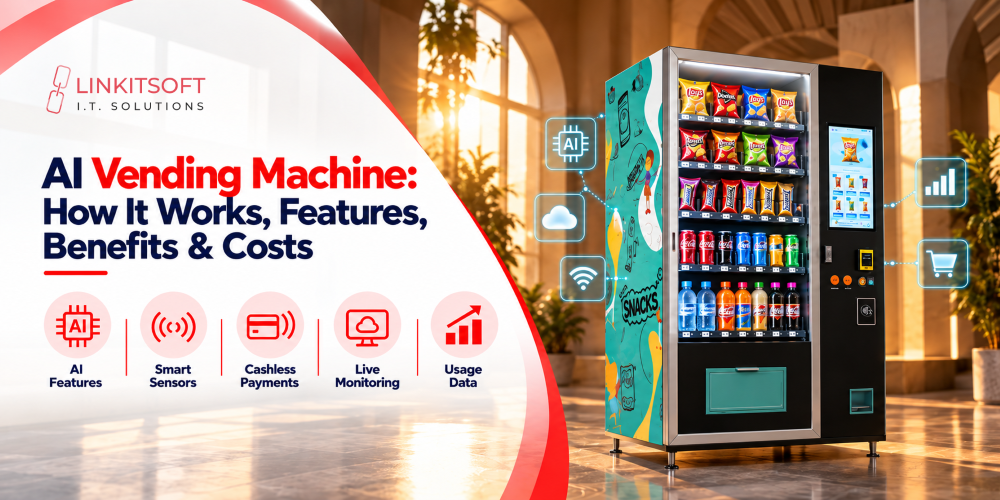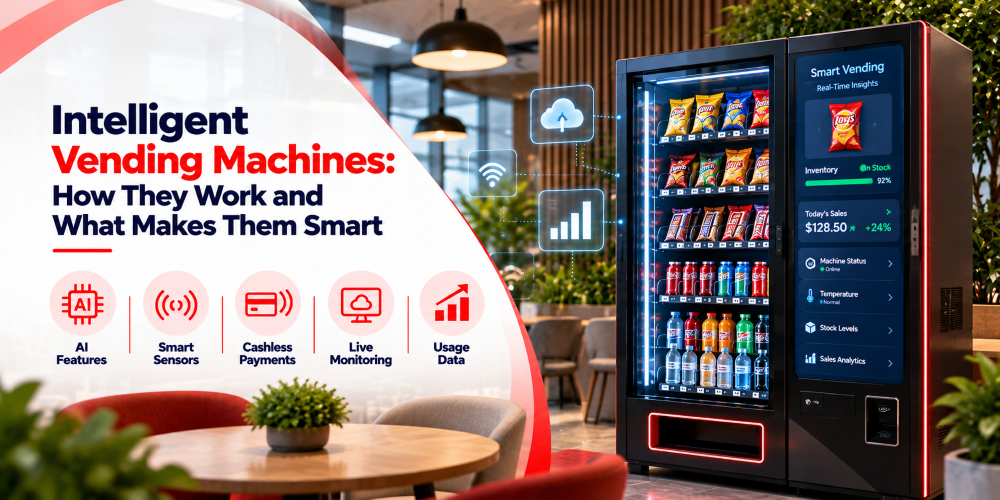
Automated vending machines are evolving beyond traditional snack and beverage dispensers. Businesses are adopting connected systems that support cashless payments, real-time inventory tracking, remote monitoring, and automated workflows.
From fresh food and pizza to ice and everyday essentials, vending technology is expanding into new retail applications. Behind these developments, software connects machine hardware, payment systems, inventory records, and management dashboards.
Understanding these technologies helps businesses identify new opportunities and plan more reliable vending operations.
How Automated Vending Machines Are Evolving
Modern vending systems combine hardware, software, and connected services to simplify purchasing and machine management.
Key developments include:
- Cashless payments: Support contactless cards, mobile wallets, and compatible digital payment methods.
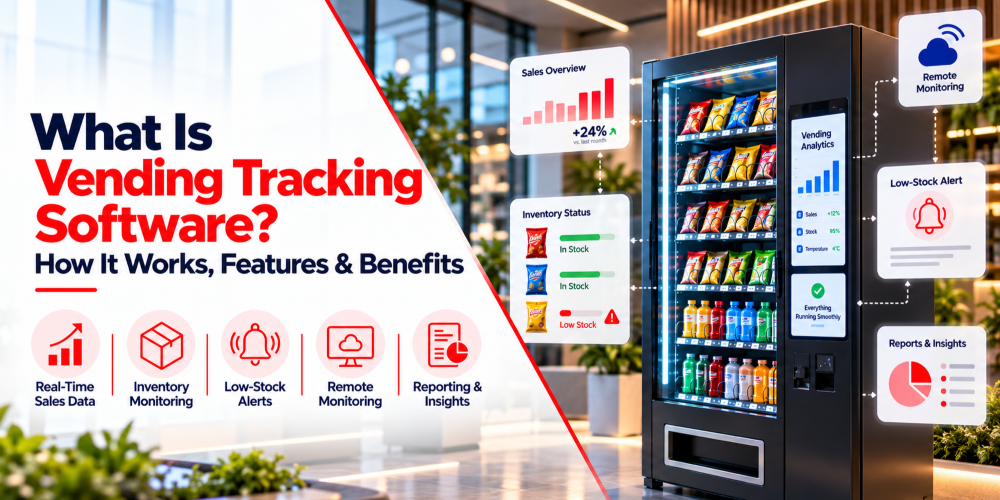
- IoT connectivity: Transmit machine status, sensor readings, and operational data.
- Real-time inventory tracking: Monitor product availability and support restocking decisions.
- Cloud-based management: Manage multiple machines through a centralized dashboard.
- Sales analytics: Identify product demand, purchasing patterns, and performance trends.
These capabilities help operators improve visibility across their vending networks without relying entirely on manual checks.

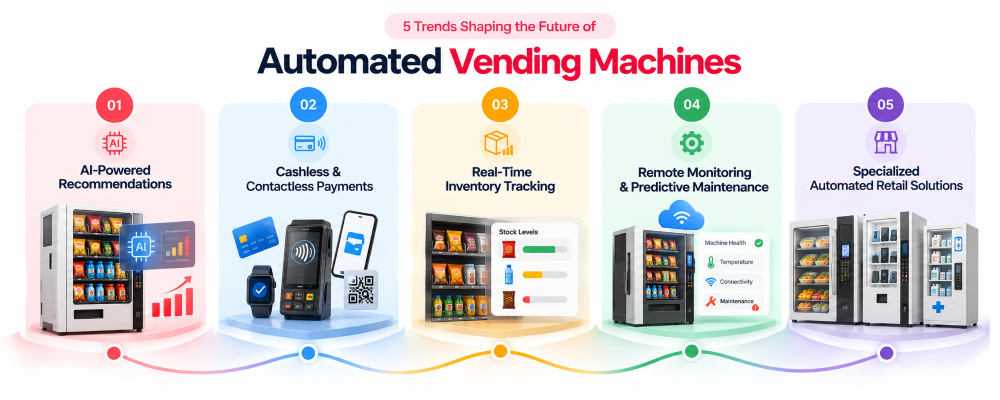
5 Trends Shaping the Future of Automated Vending Machines
1. AI-Powered Product Recommendations
Artificial intelligence can analyze sales history, product demand, and purchasing patterns to help operators make informed decisions.
For example, a vending machine in a university may require a different product mix from one installed in an office building.
AI-driven analytics can help businesses:
- Identify high-demand products.
- Forecast potential inventory requirements.
- Evaluate location-specific purchasing patterns.
- Optimize product assortment and promotions.
Reliable results depend on accurate data, suitable analytics models, and integration with inventory systems.
2. Cashless and Contactless Payments
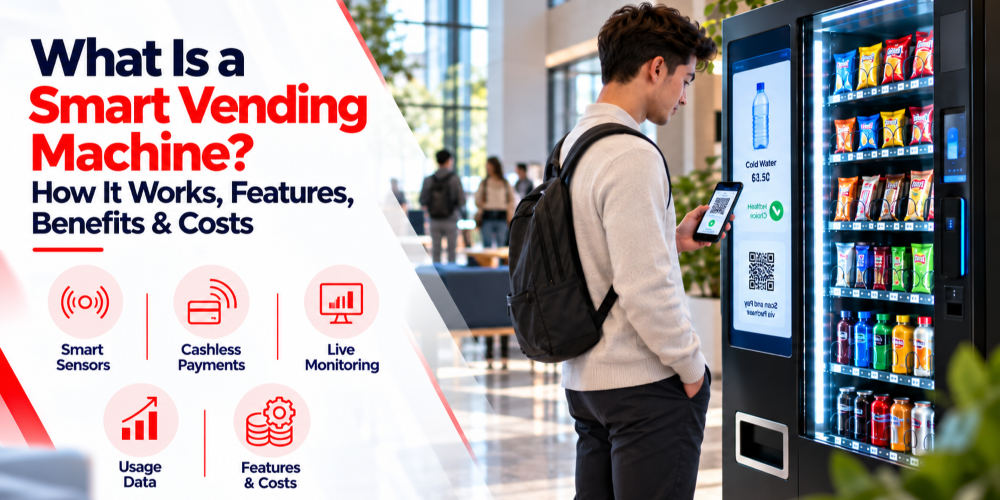
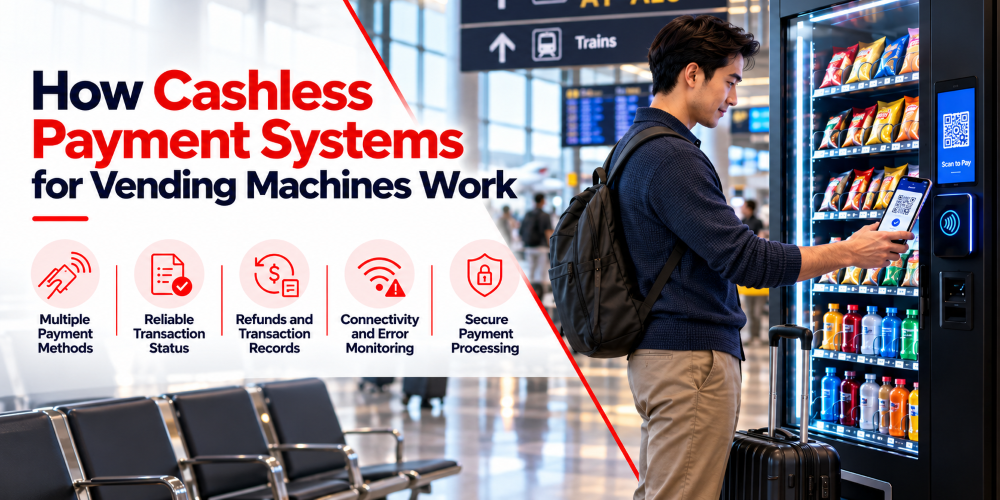
Customers increasingly expect convenient payment options. Modern vending machines can integrate compatible payment terminals, contactless cards, mobile wallets, and QR-based purchasing workflows.
A reliable payment integration should handle:
- Transaction authorization and confirmation.
- Payment failures and supported refund workflows.
- Secure communication with payment providers.
- Transaction records and financial reconciliation.
Businesses should also evaluate hardware compatibility and payment provider requirements before implementing a new payment system.
3. Real-Time Inventory Tracking
Manual inventory checks become more difficult as businesses expand their vending operations.
Connected sensors, dispensing events, and transaction records can help software estimate stock levels and identify products that need restocking.
Key software capabilities include:
- Stock-level monitoring across multiple locations.
- Low-inventory alerts.
- Product movement and sales tracking.
- Inventory synchronization with external systems.
- Restocking reports for operators.
Inventory accuracy depends on the available sensors, dispensing hardware, and reconciliation logic. Software should account for failed dispensing events and stock adjustments.
4. Remote Monitoring and Predictive Maintenance
Remote monitoring gives operators visibility into machine health without requiring frequent on-site inspections.
Depending on the hardware, vending software can collect equipment status, connectivity information, temperature readings, and error logs.
Predictive maintenance can use historical equipment data to identify patterns associated with potential failures.
This can help businesses:
- Detect machine errors earlier.
- Prioritize maintenance visits.
- Monitor connectivity and equipment status.
- Maintain service histories.
- Reduce avoidable operational interruptions.
Predictive alerts should be based on suitable data and validated against actual equipment behavior.
5. Specialized Automated Retail Solutions
Vending technology is expanding beyond conventional snack and beverage machines. Specialized systems require software that supports their unique products, dispensing mechanisms, and operating conditions.
How Different Types of Automated Vending Machines Are Changing Retail
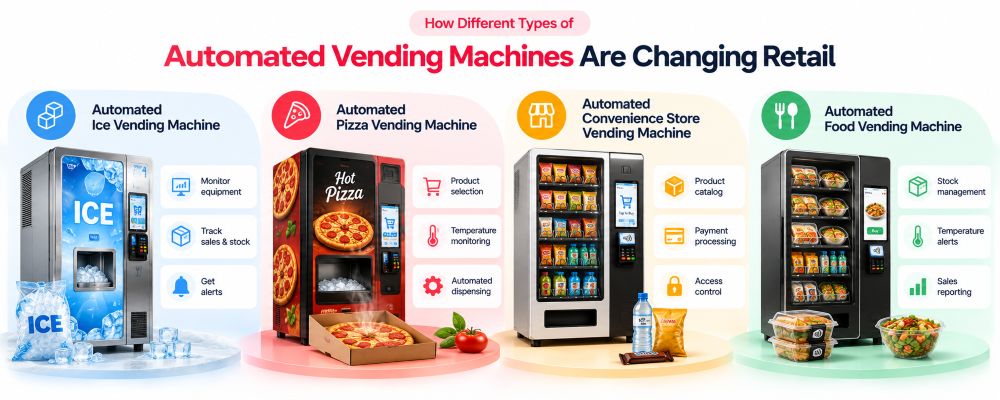
Automated Ice Vending Machine
An automated ice vending machine enables customers to purchase ice with limited staff involvement. Depending on its design, the system may need to manage dispensing, payments, temperature monitoring, and equipment status.
Software can help operators:
- Monitor connected equipment and sensor readings.
- Track sales and product availability.
- Receive alerts for equipment issues.
- Review operational data through a centralized dashboard.
The implementation should account for environmental conditions, sanitation requirements, and available hardware interfaces.
Automated Pizza Vending Machine
An automated pizza vending machine may involve refrigerated storage, heating or preparation cycles, payment processing, and automated dispensing.
Its software must coordinate the customer order with the machine’s operating sequence.
Important capabilities include:
- Product selection and order management.
- Payment confirmation before dispensing.
- Temperature and equipment status monitoring.
- Inventory synchronization.
- Error handling for failed preparation or dispensing.
The system must operate within the machine’s validated parameters and applicable food safety requirements.
Automated Convenience Store Vending Machine
An automated convenience store vending machine can provide access to everyday essentials, packaged food, drinks, and personal care products.
Depending on the setup, it may use multiple dispensing modules, electronic access controls, or connected storage cabinets.
A suitable software platform can support:
- Product catalogs and pricing.
- Inventory and sales synchronization.
- Payment processing.
- Access control and transaction records.
- Integration with point-of-sale or inventory management systems.
These integrations help maintain consistent business records and provide greater visibility into product availability.
Automated Food Vending Machine
An automated food vending machine can dispense packaged meals, snacks, beverages, and other food products.
Food-focused systems may require additional monitoring and inventory controls.
Software can help businesses manage:
- Product availability and stock rotation.
- Expiration-date records, where supported.
- Temperature alerts from connected sensors.
- Sales and inventory reporting.
- Machine status and maintenance events.
Software monitoring supports operational oversight but does not replace required inspections, sanitation practices, or food safety procedures.
Automated Vending Machine Types Compared
Different vending applications have different software and hardware requirements.
| Machine type | Key software requirements | Main operational priority |
| Ice vending machine | Payment processing, sensor monitoring, remote alerts | Equipment reliability |
| Pizza vending machine | Order workflows, temperature monitoring, dispensing control | Safe and accurate fulfillment |
| Convenience store vending machine | Product catalog, inventory, access control, payments | Product availability and transaction accuracy |
| Food vending machine | Stock tracking, temperature alerts, sales reporting | Inventory and food safety oversight |
The final feature set depends on the machine’s hardware, business model, and operating environment.
The Role of Software in Next-Generation Vending Machines
Modern vending solutions require several software components to work together.
Core Software Components
- Machine-side application: Manages product selection, user interactions, and supported dispensing workflows.
- Cloud backend: Processes business logic, stores operational data, and coordinates connected services.
- Payment integration: Communicates with supported payment providers and manages transaction states.
- Inventory management: Tracks stock movements, availability, and restocking requirements.
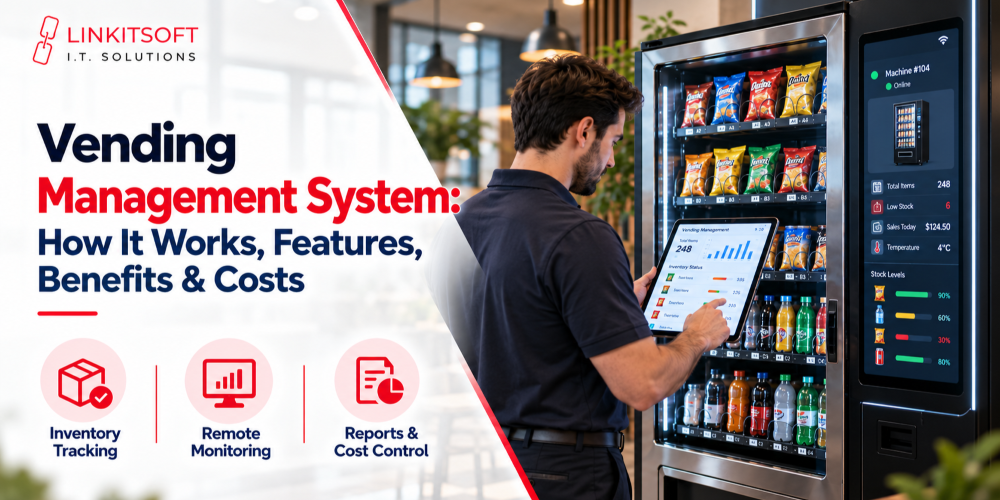
- Management dashboard: Displays sales, machine status, alerts, and operational reports.
- APIs and integrations: Connect vending systems with external platforms and business applications.
For example, when a customer purchases a product, the software may need to confirm payment, trigger dispensing, update inventory, and record the transaction.
These processes require reliable data synchronization, error handling, and transaction reconciliation.
Technical Challenges Businesses Must Address
Developing a connected vending system involves more than creating a customer-facing interface. The underlying architecture must account for equipment limitations, connectivity, and security.
Hardware Compatibility
Vending machines may use different controllers, communication protocols, operating systems, and peripherals.
A technical assessment helps determine:
- Which hardware interfaces are available.
- Whether existing equipment supports integration.
- Which components require modification.
- How the machine communicates with the backend.
Connectivity and Offline Operation
Network interruptions can affect payment processing, monitoring, and data synchronization.
Software may need:
- Local processing for supported operations.
- Queued events for later synchronization.
- Retry mechanisms for interrupted requests.
- Conflict resolution to prevent inconsistent records.
Offline capabilities must be designed around the machine’s hardware and payment requirements.
Payment Security and Data Protection
Vending systems handling digital transactions need secure integrations and appropriate access controls.
Businesses should consider:
- Secure communication between system components.
- Authentication and role-based access.
- Payment provider security requirements.
- Transaction logging and reconciliation.
- Protection of customer and operational data.
Scalability and Fleet Management
A system supporting a few machines may need additional infrastructure as the business expands.
Scalable backend services, efficient device communication, centralized monitoring, and well-designed APIs help support larger vending fleets.
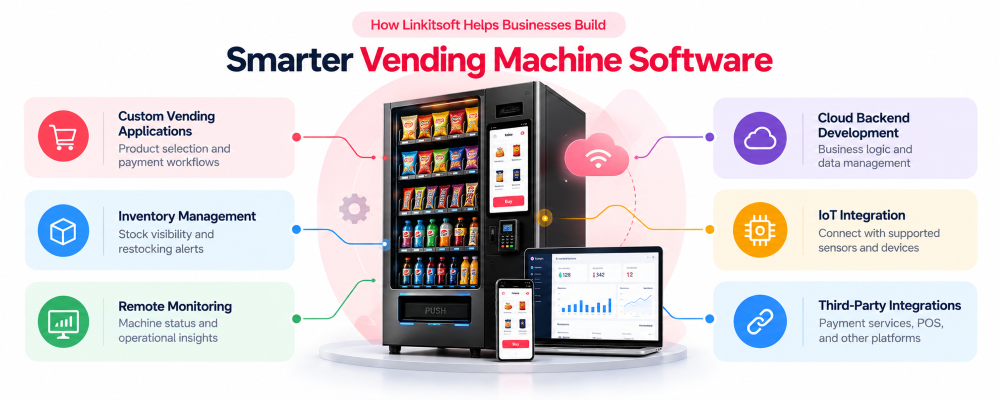
How Linkitsoft Helps Businesses Build Smarter Vending Machine Software
Linkitsoft develops custom vending software to support businesses building new vending solutions or upgrading existing operations.
The development process focuses on connecting machine hardware, customer-facing applications, backend services, and management tools according to project requirements.
Vending Software Capabilities
- Custom vending applications: Product selection, purchasing workflows, and compatible payment integrations.
- Inventory management: Stock visibility, product movement tracking, and restocking alerts.
- Remote monitoring: Dashboards for machine status, connectivity, and operational events.
- Cloud backend development: Business logic, databases, and communication between system components.
- IoT integration: Connectivity with supported sensors, controllers, and monitoring devices.
- Third-party integrations: Connections with payment services, POS systems, and external business platforms.
Linkitsoft’s vending software portfolio includes solutions involving contactless purchasing, QR-based access, digital payments, inventory synchronization, and remote management.
Before development begins, businesses should define their required workflows, available hardware interfaces, and integration needs. This helps establish a practical scope for development, testing, and deployment.
What Will Automated Vending Machines Look Like in the Future?
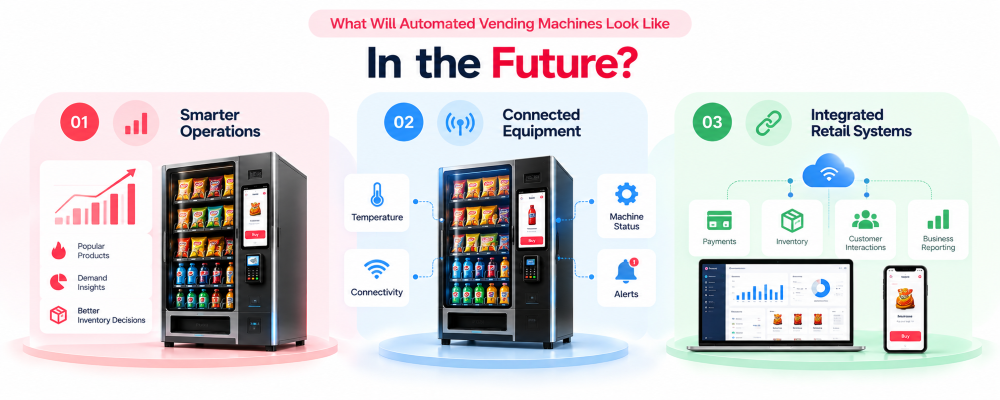
The future of automated vending will likely involve greater connectivity, more specialized equipment, and stronger integration between physical machines and digital business systems.
Three developments are particularly important:
- Smarter operations: AI and analytics will help businesses understand demand and evaluate inventory decisions.
- Connected equipment: IoT monitoring will improve visibility into machine status and operational issues.
- Integrated retail systems: Vending software will increasingly connect payments, inventory, customer interactions, and business reporting.
However, successful automation requires more than adopting new technologies. Businesses must also address security, hardware compatibility, data accuracy, and operational reliability.
A well-planned software architecture gives businesses a stronger foundation for expanding their vending operations as requirements change.